1723 · Native Peoples
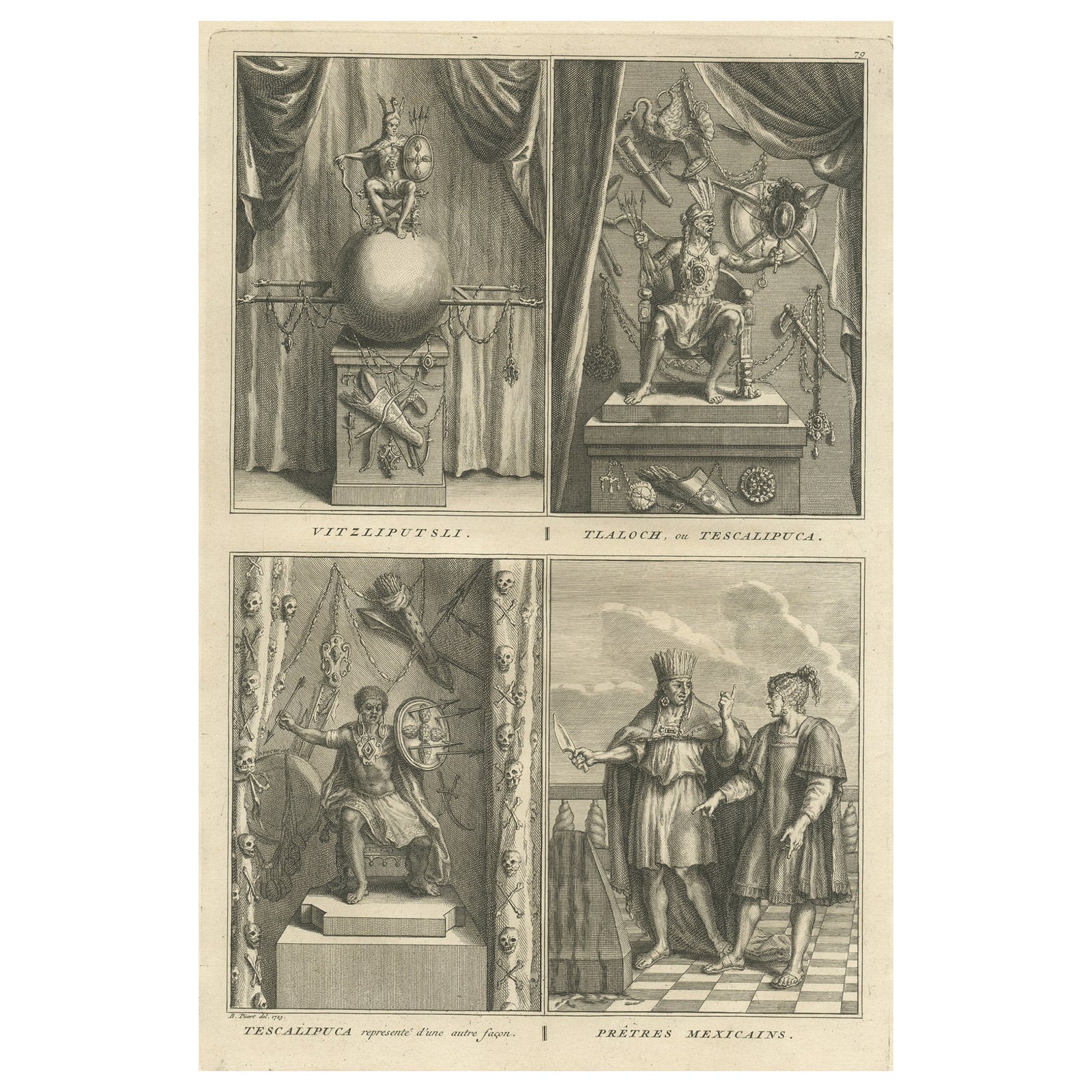
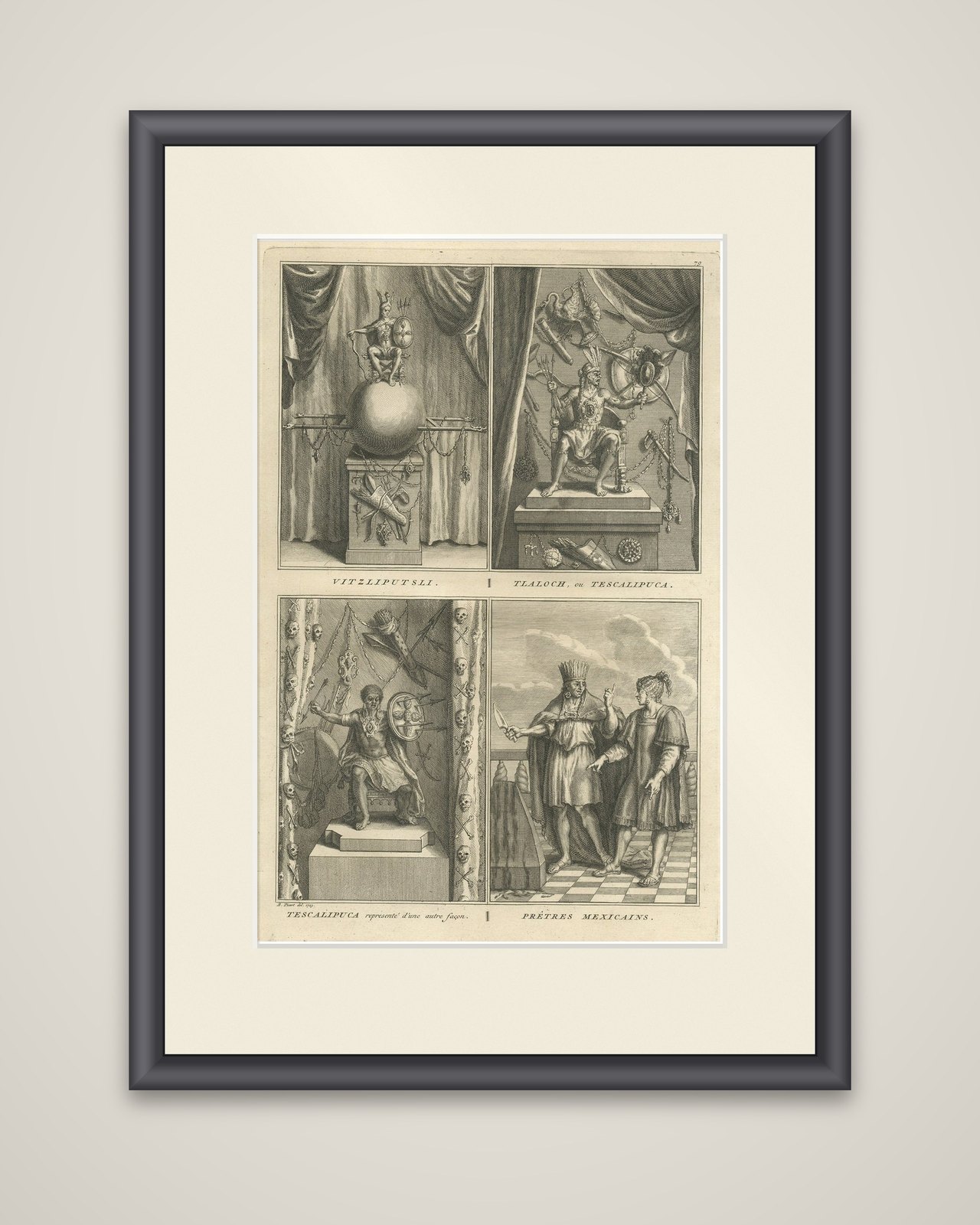
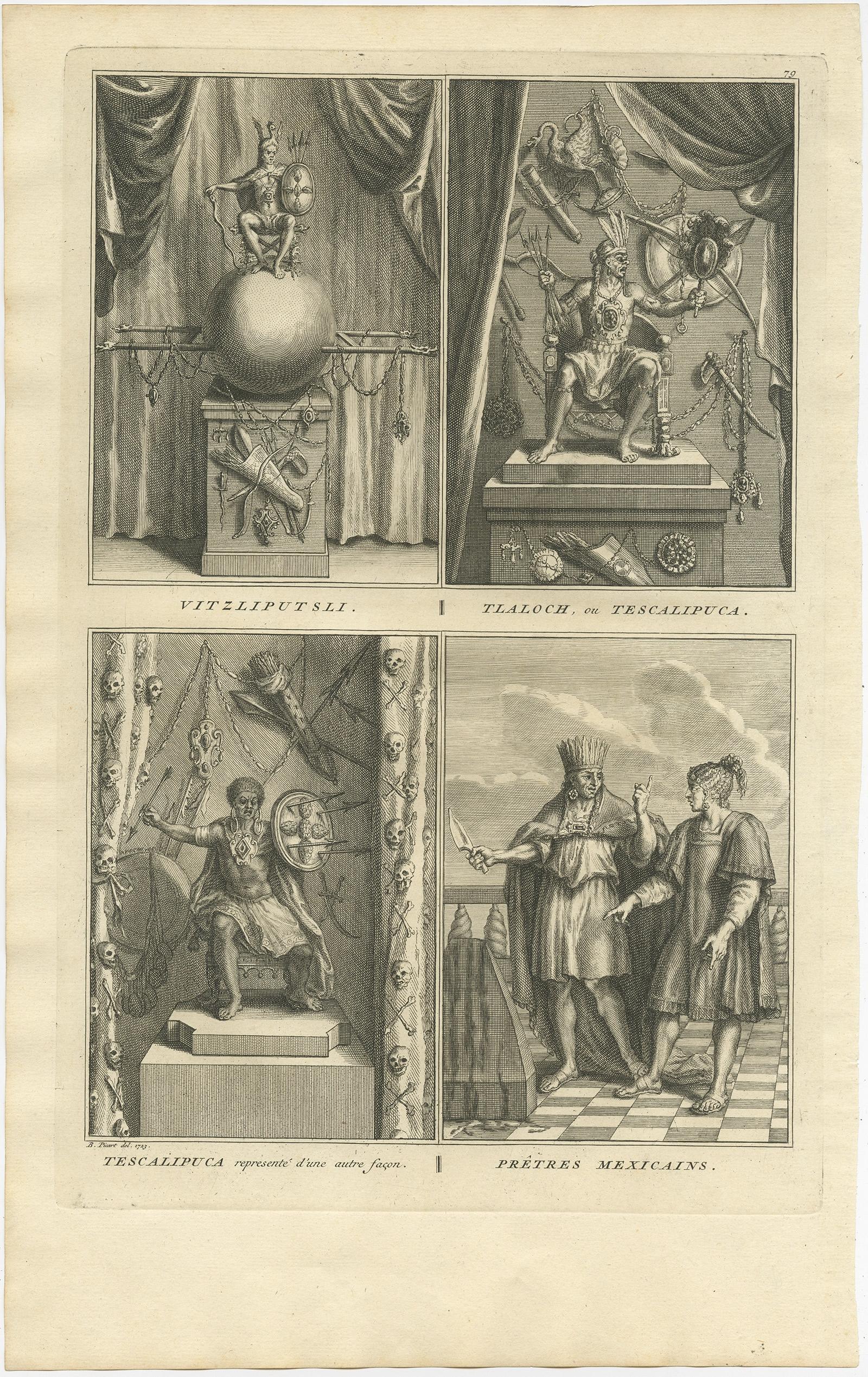
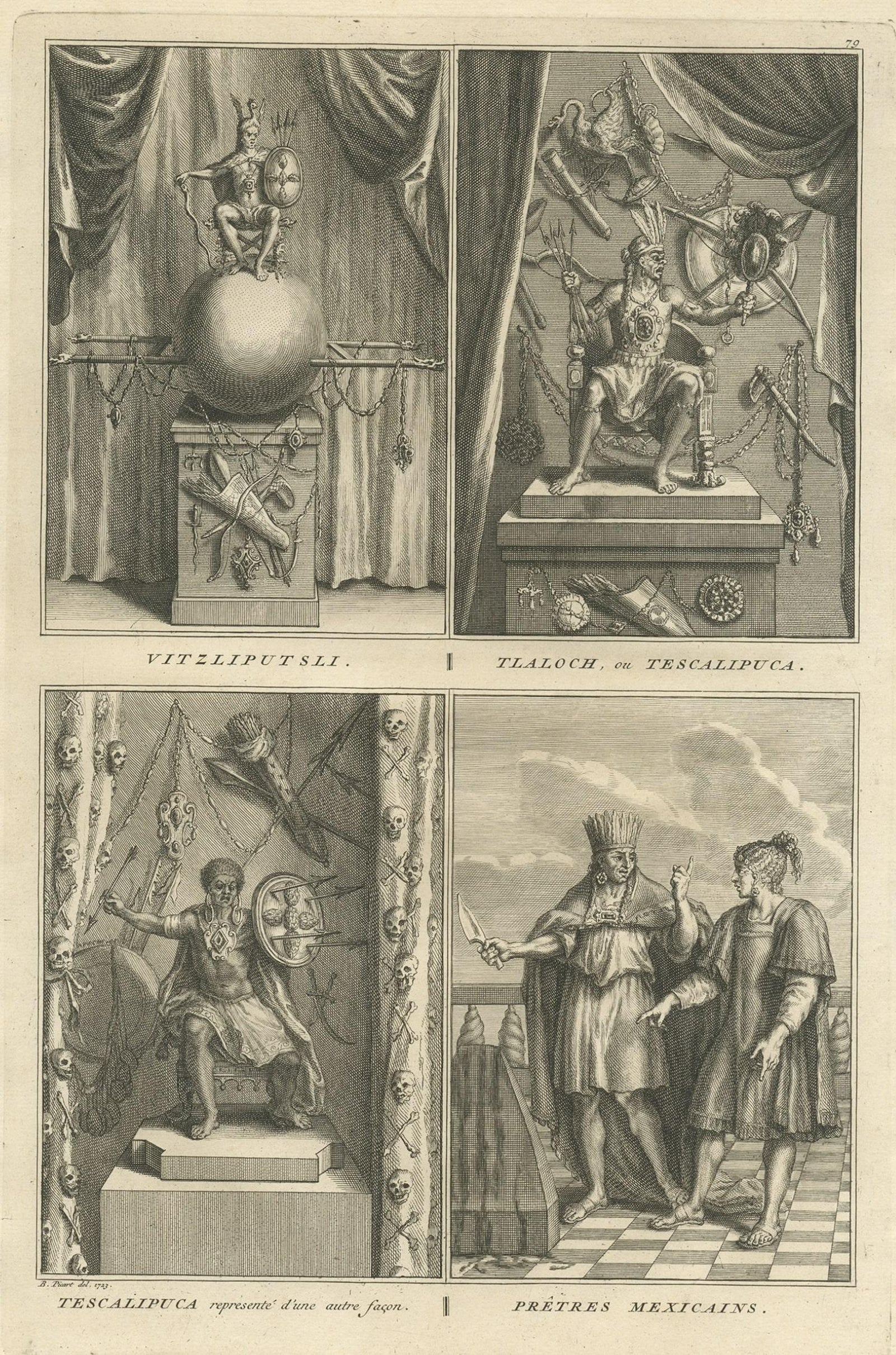
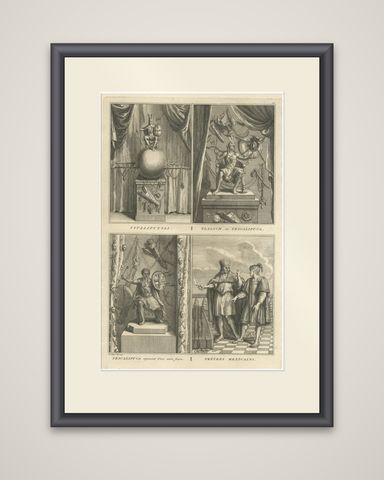
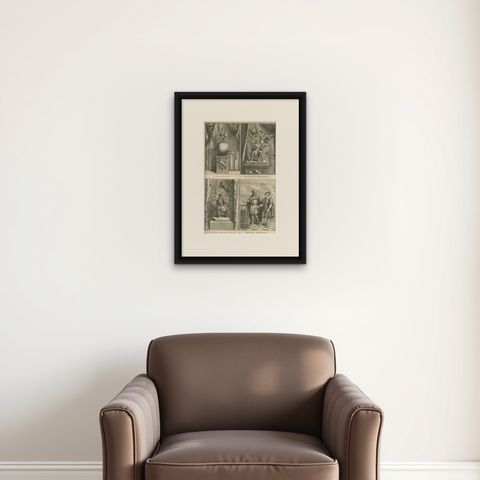
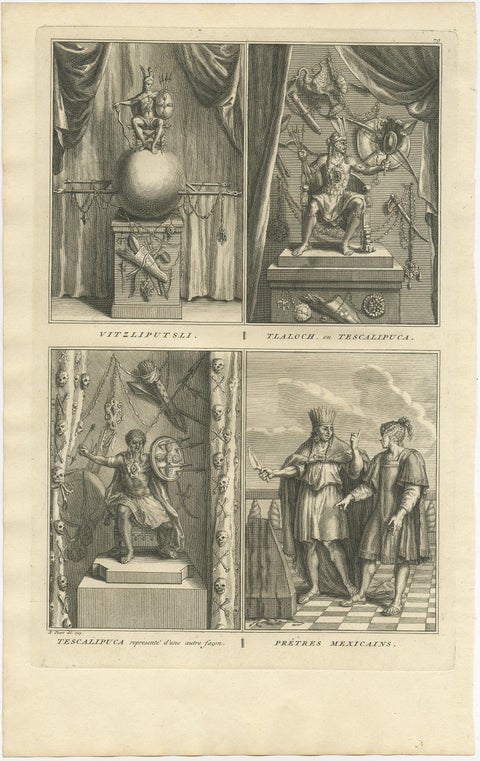
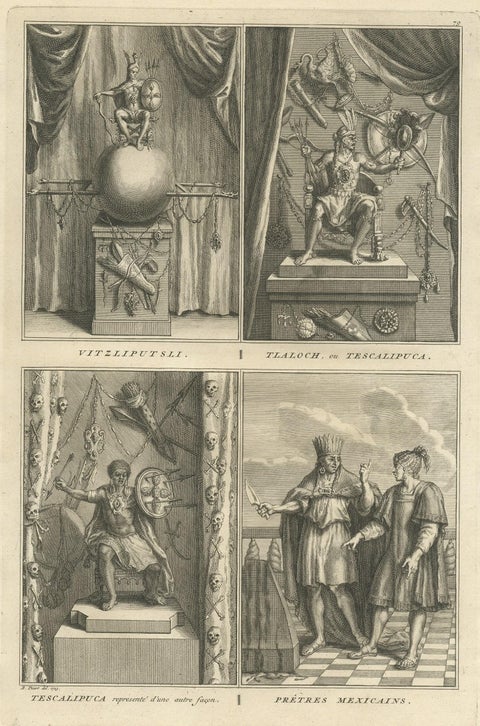
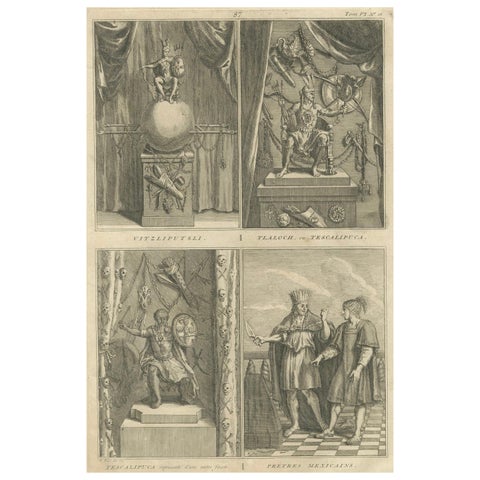
Old Print of Aztec deities Vitzliputsli, Tlaloch or Tescalipuca, Mexico, 1723
$470
€420 · dollar price at today's exchange rate
Buy now Ask a question
Shipping to the United States: $51 standard, $73 express, insured and tracked.
- Date
- 1723
- Kind
- Native Peoples
- Size
- 39.5 × 25 cm (15.6 × 9.8 in)
- Period
- Colonial America
- Places
- Mexico
- Reference
- BGI-01020
What the condition grades mean
- Excellent
- Bright and clean, with no faults worth mentioning.
- Very good
- Only light signs of age, such as faint toning.
- Good
- Normal signs of age for a sheet of this period: toning, some foxing, small marks or neat old repairs.
- Fair
- Clear faults such as staining, tears or repairs, priced to match.
Every fault we see is written in the condition note, and the whole sheet is shown uncropped in the photos.
Guaranteed original. This is an original of the period stated, not a later reproduction or print-on-demand copy. If it is ever shown to be otherwise, we refund you in full.
Shipping to the United States. Sent from our gallery in Langweer, the Netherlands, flat between boards or rolled in a tube, and fully insured.
Delivery and import charges.
About this piece
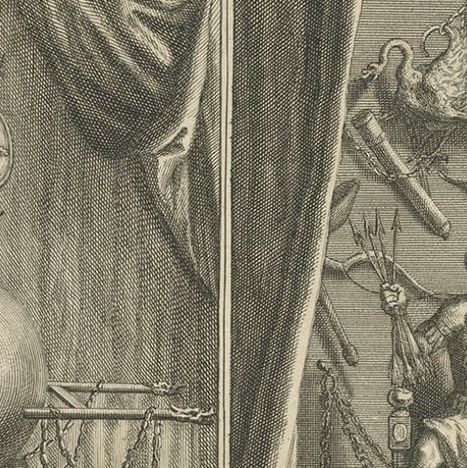
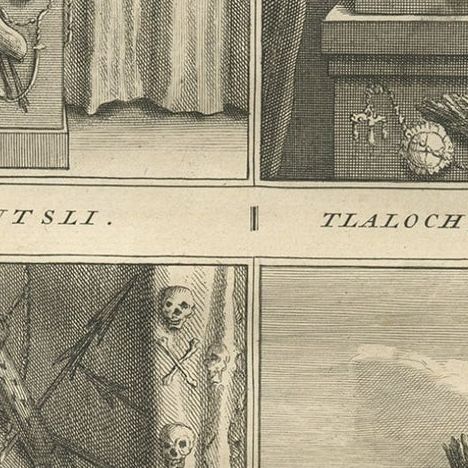
Vitzliputsli, Tlaloch and Tescalipuca, the Aztec deities, with Mexican priests, an original copper engraving of 1723 from Ceremonies et coutumes religieuses by Bernard Picart. Four images share the sheet, each captioned: "Vitzliputsli", "Tlaloch, ou Tescalipuca", "Tescalipuca représenté d'une autre façon" and "Prêtres Mexicains". The old listing names the author as A. Moubach.
At the upper left the god Vitzliputsli sits on a globe, armed with a shield and spear, above a pedestal strewn with arms and ornaments, with curtains behind. At the upper right Tlaloch, or Tescalipuca, sits enthroned in plumes and armor with a staff, his throne set with weapons and ornaments. At the lower left Tescalipuca is shown in another form, seated before a wall of skulls and crossbones, and at the lower right two Mexican priests in feathered headdresses and robes stand on a chessboard floor, one holding a knife.
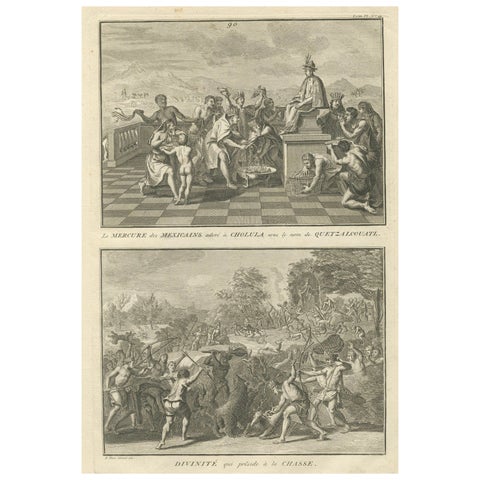
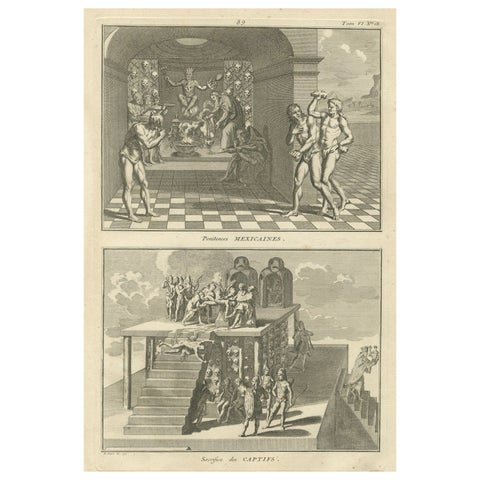
The print is one of the plates by Picart, a French engraver who lived in Amsterdam, which showed European readers the religions of the world. The figures are drawn in the European style of the early eighteenth century, which mixes the real attributes of the Aztec gods with classical ideas.