1836 · Native Peoples
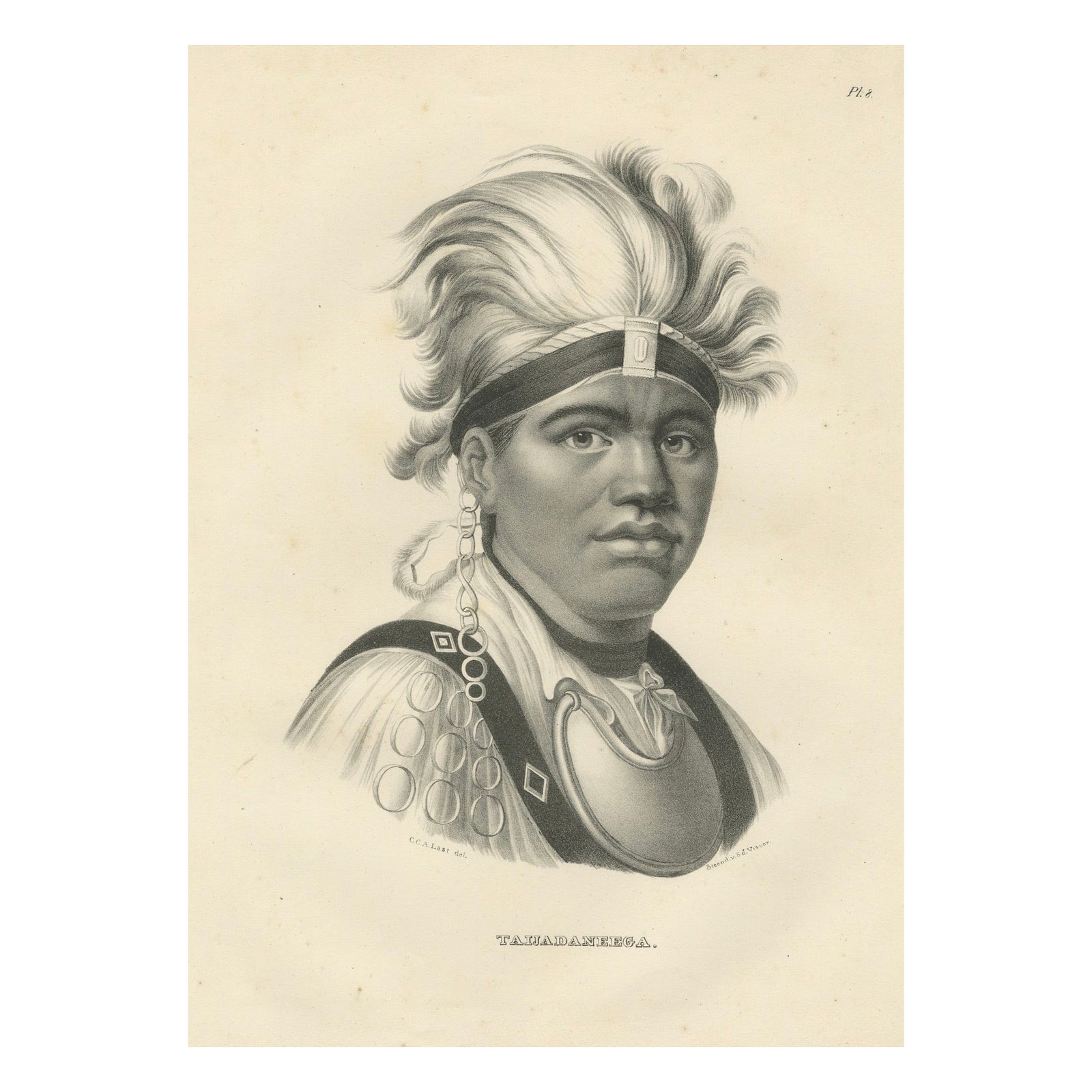
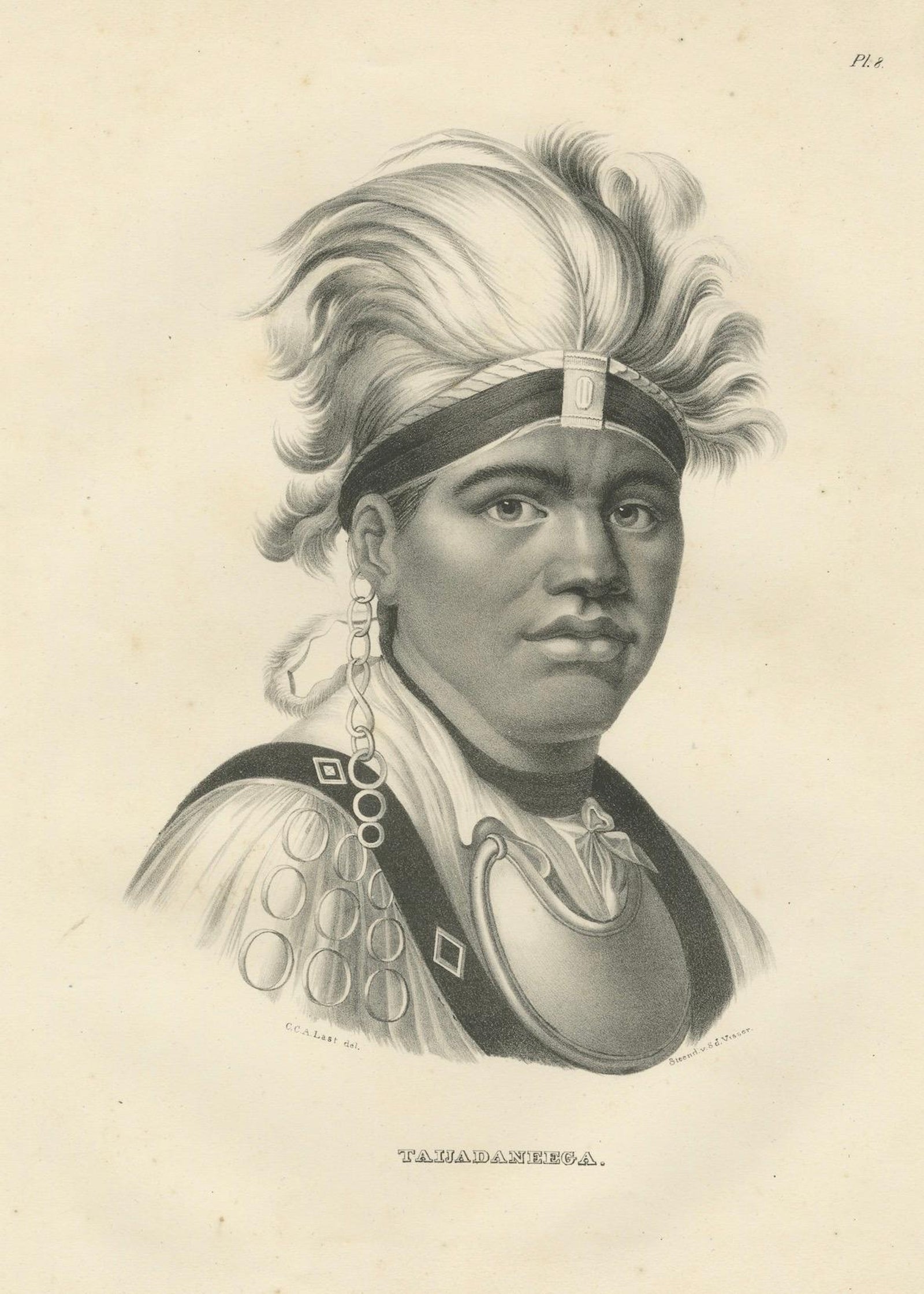
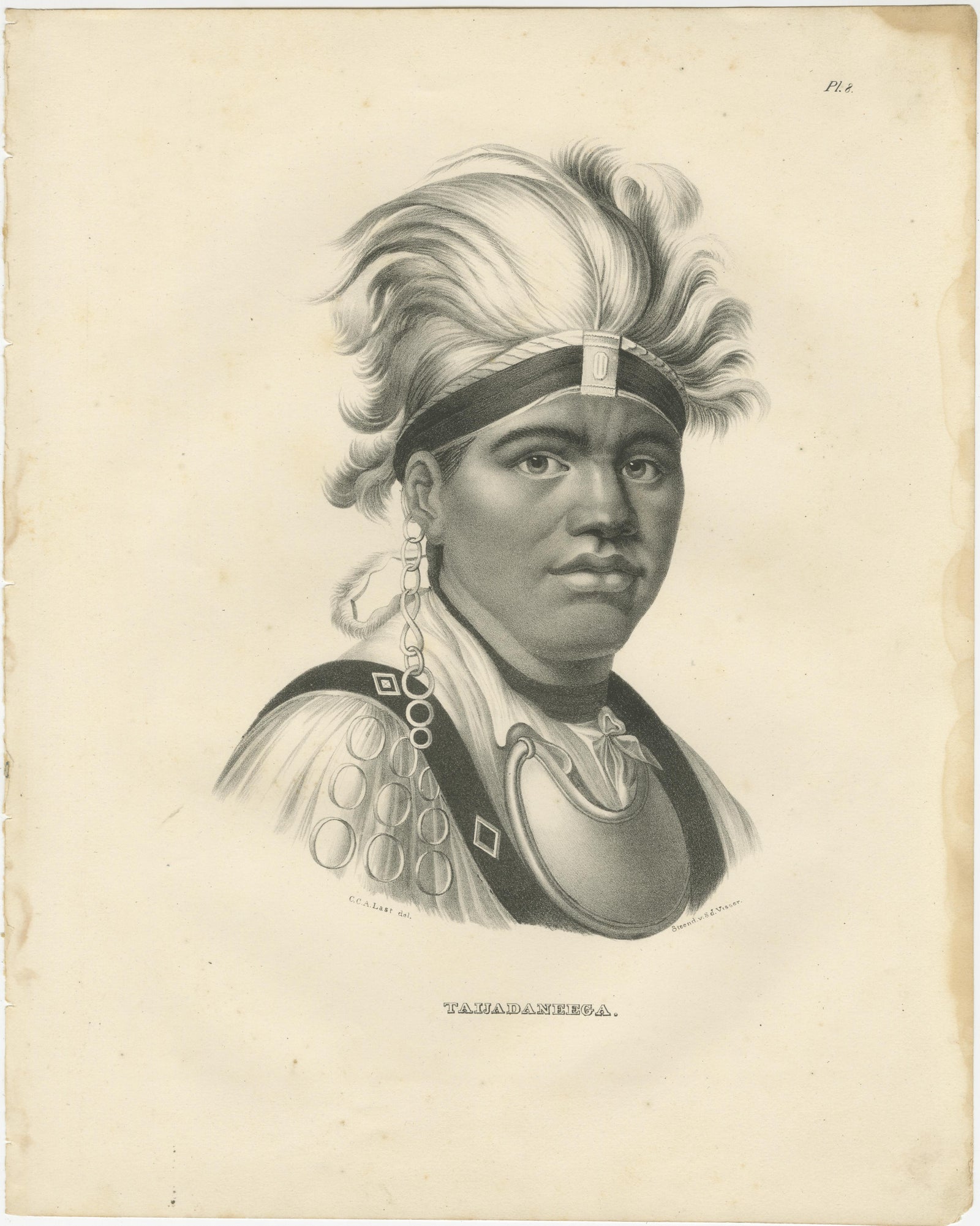
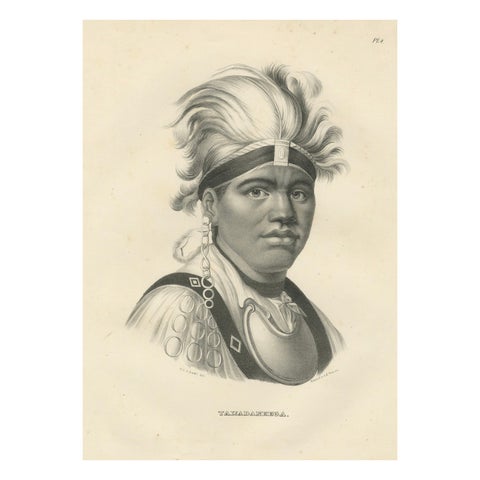
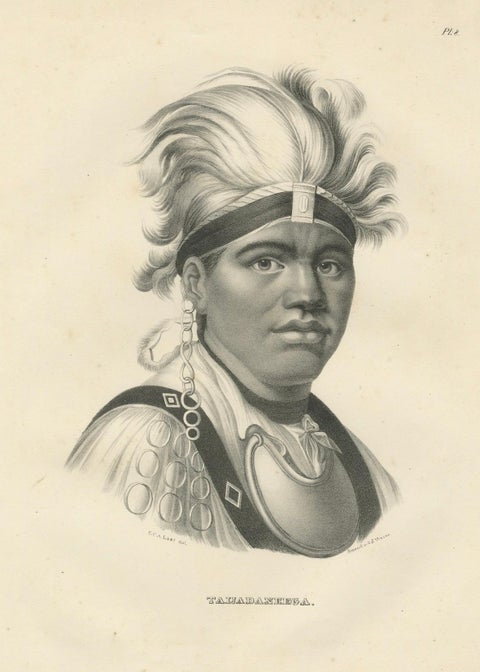
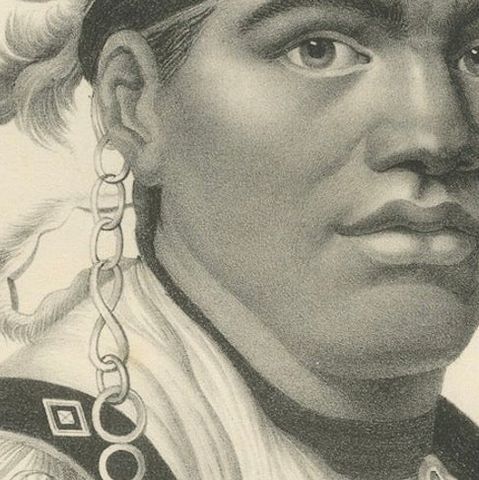
Portrait of Native American Tawadanega by Karl Joseph Brodtmann, 1836
$490
€440 · dollar price at today's exchange rate
Buy now Ask a question
Shipping to the United States: $51 standard, $73 express, insured and tracked.
- Date
- 1836
- Kind
- Native Peoples
- Size
- 1 × 1 cm (0.4 × 0.4 in)
- Period
- The Early Republic
- Reference
- BG-13176-8
What the condition grades mean
- Excellent
- Bright and clean, with no faults worth mentioning.
- Very good
- Only light signs of age, such as faint toning.
- Good
- Normal signs of age for a sheet of this period: toning, some foxing, small marks or neat old repairs.
- Fair
- Clear faults such as staining, tears or repairs, priced to match.
Every fault we see is written in the condition note, and the whole sheet is shown uncropped in the photos.
Guaranteed original. This is an original of the period stated, not a later reproduction or print-on-demand copy. If it is ever shown to be otherwise, we refund you in full.
Shipping to the United States. Sent from our gallery in Langweer, the Netherlands, flat between boards or rolled in a tube, and fully insured.
Delivery and import charges.
About this piece
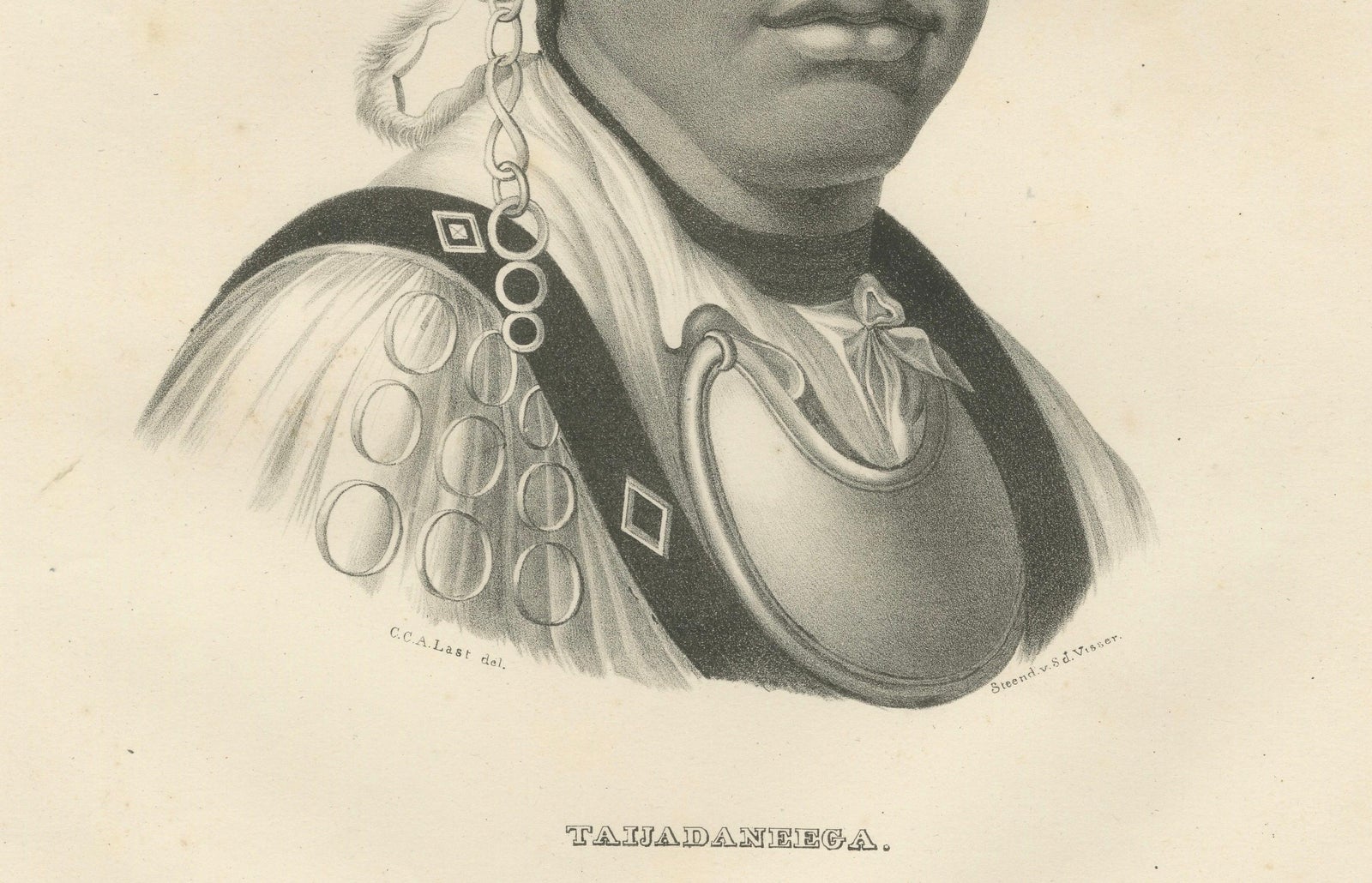
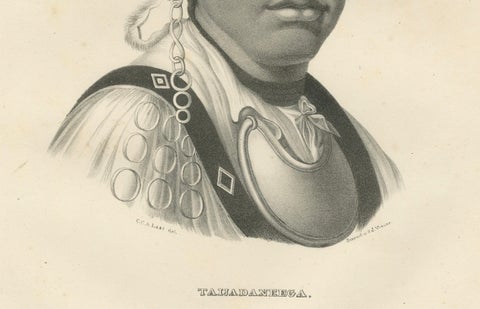
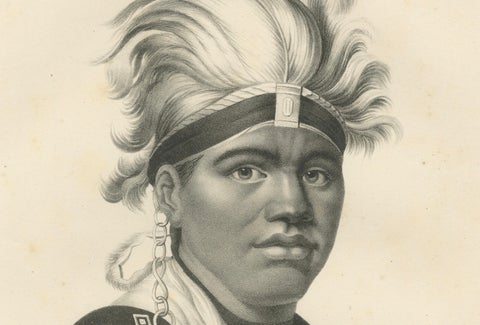
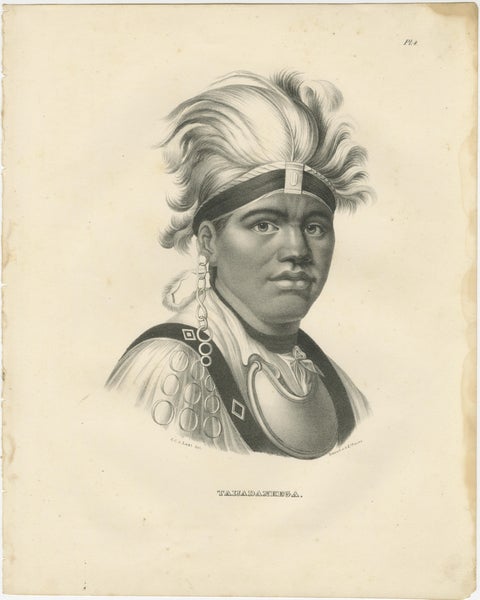
Tawadanega, a Native American man in feathered headdress, portrayed in an original lithograph credited to Karl Joseph Brodtmann, 1836. The plate is numbered "Pl. 4" at the upper right, the sitter's name "Tawadanega" is lettered beneath the portrait, and the draftsman's and lithographer's credits appear small in the lower margin. The sheet is printed in black and gray tones on cream paper.
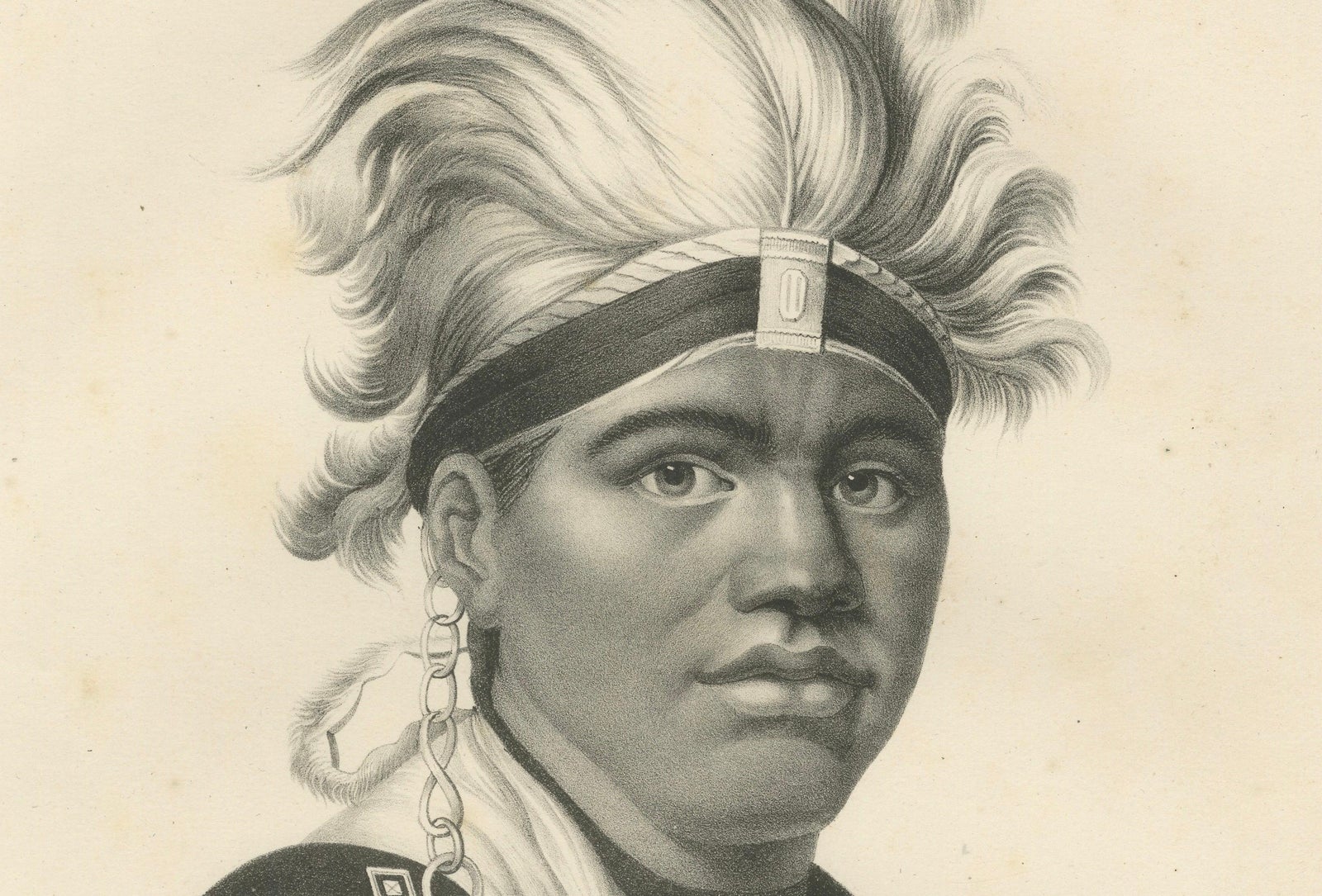
The portrait is a bust, turned slightly to the left, with a direct, calm gaze. A tall crest of white feathers rises from a broad dark headband fastened with a small metal plate at the center. A long chain of rings hangs from the ear. Across the shoulders he wears a light cloak decorated with rows of large round discs, a dark strap with diamond-shaped ornaments crosses the chest, and a large crescent-shaped gorget hangs at the throat above a knotted neckcloth.
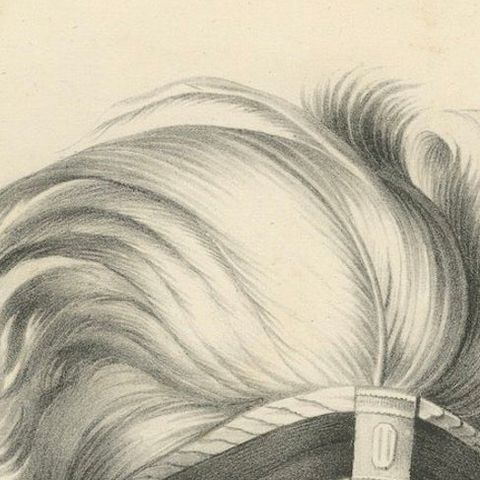
The shading is built up in fine crayon work, with the feathers and the metal ornaments given the greatest care, a hallmark of early lithographic portraiture. Plates of this kind introduced European readers to named individuals as well as to the dress and ornaments of the peoples of the American continent.