Views & Engravings
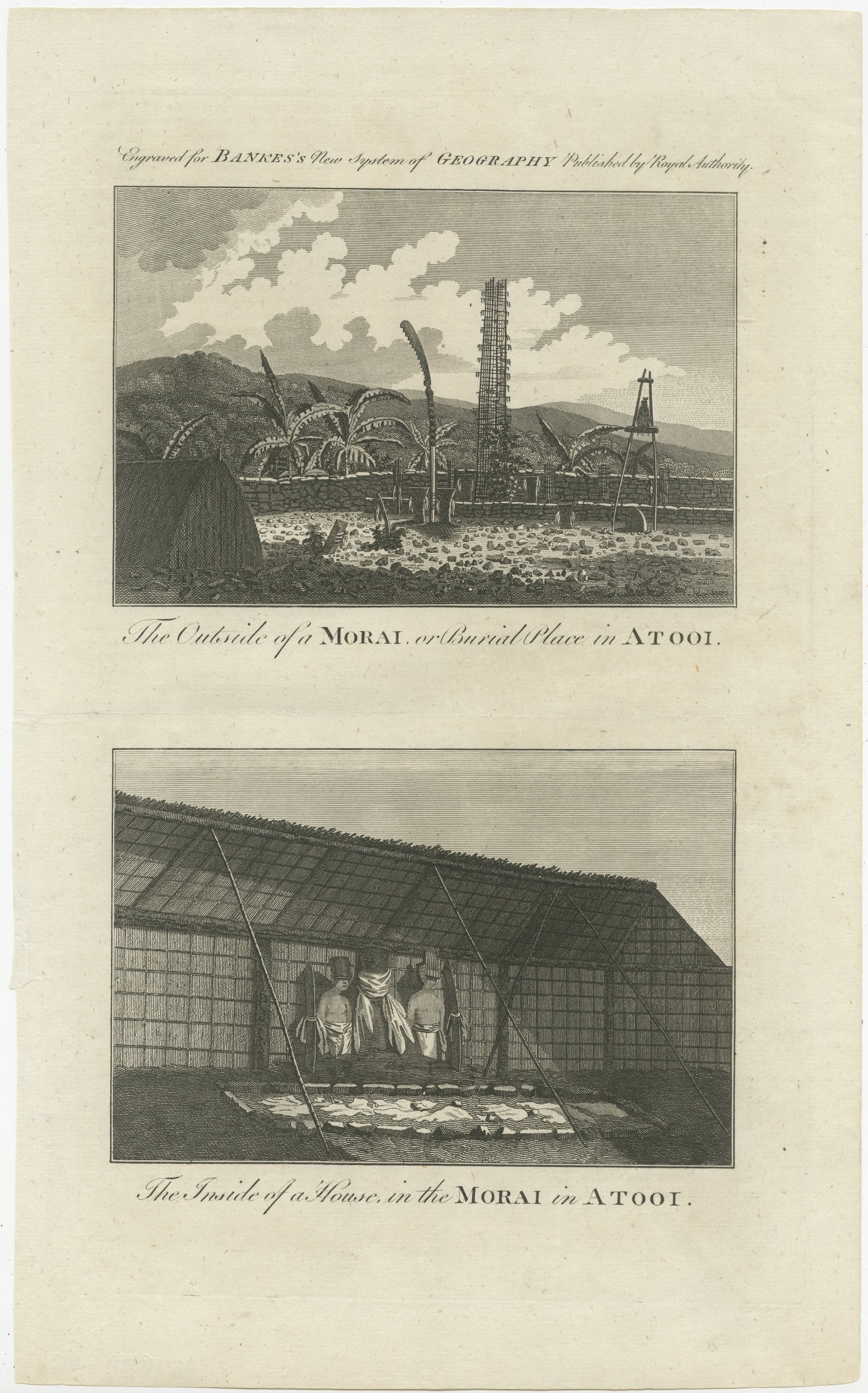
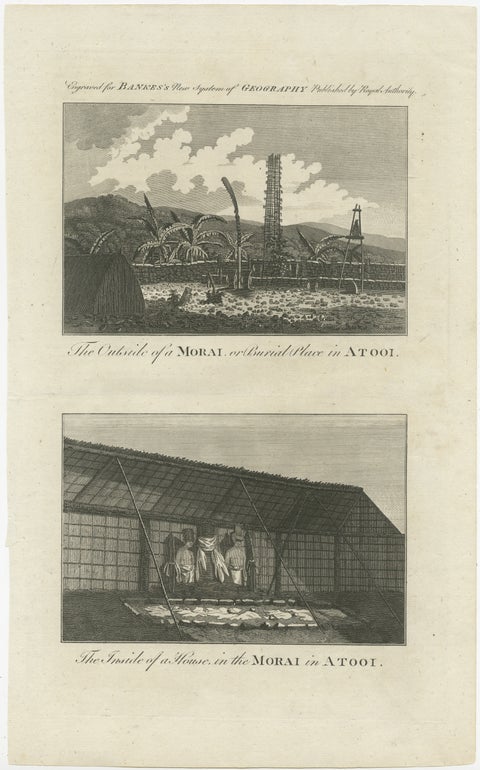
18th-Century Engraving of Hawaiian Morai and House Interior, c. 1780s
$155
€140 · dollar price at today's exchange rate
Buy now Ask a question
Shipping to the United States: $51 standard, $73 express, insured and tracked.
- Kind
- Views & Engravings
- Size
- 38.5 × 23.5 cm (15.2 × 9.3 in)
- Places
- Hawaii
- Reference
- BG-13599-42
What the condition grades mean
- Excellent
- Bright and clean, with no faults worth mentioning.
- Very good
- Only light signs of age, such as faint toning.
- Good
- Normal signs of age for a sheet of this period: toning, some foxing, small marks or neat old repairs.
- Fair
- Clear faults such as staining, tears or repairs, priced to match.
Every fault we see is written in the condition note, and the whole sheet is shown uncropped in the photos.
Guaranteed original. This is an original of the period stated, not a later reproduction or print-on-demand copy. If it is ever shown to be otherwise, we refund you in full.
Shipping to the United States. Sent from our gallery in Langweer, the Netherlands, flat between boards or rolled in a tube, and fully insured.
Delivery and import charges.
About this piece
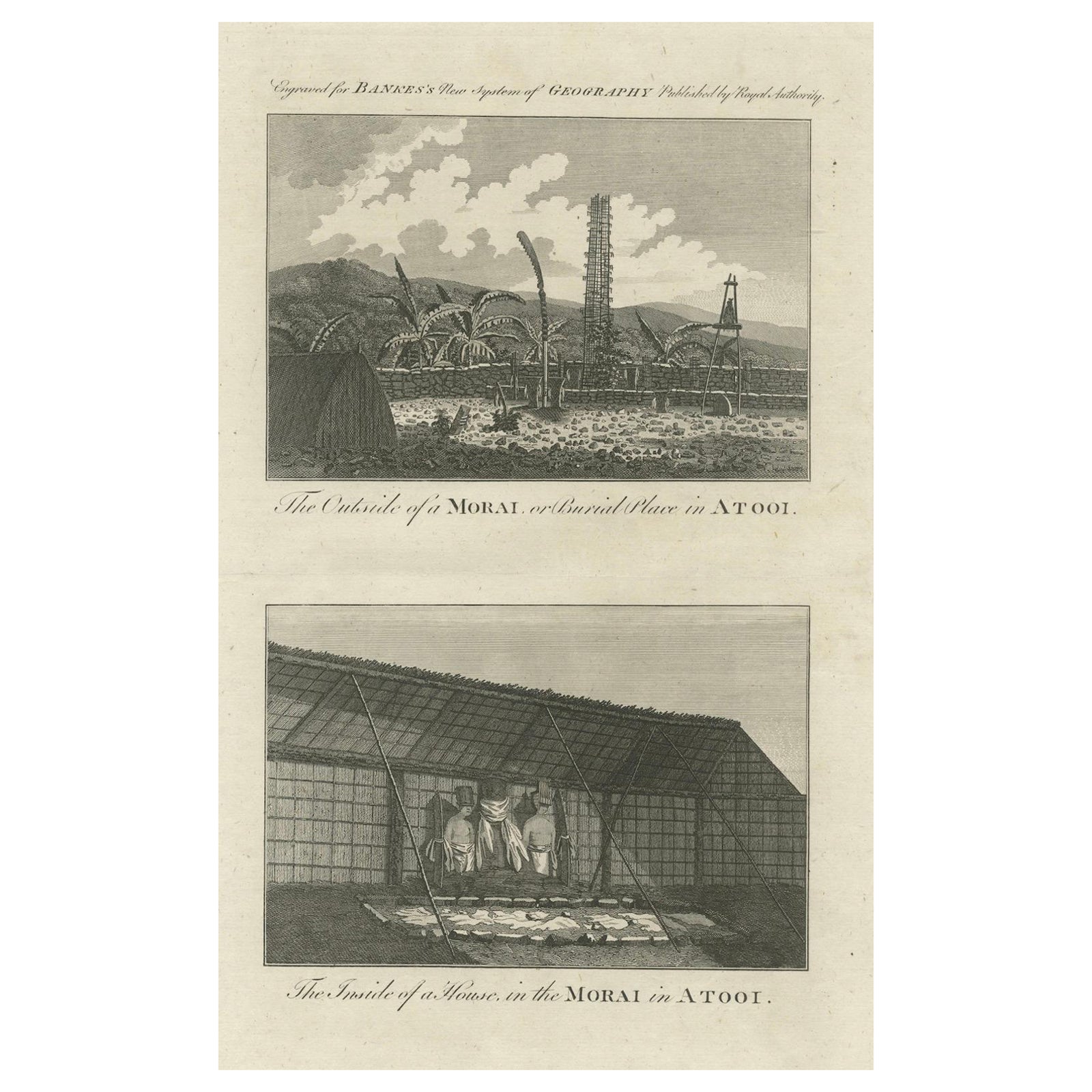
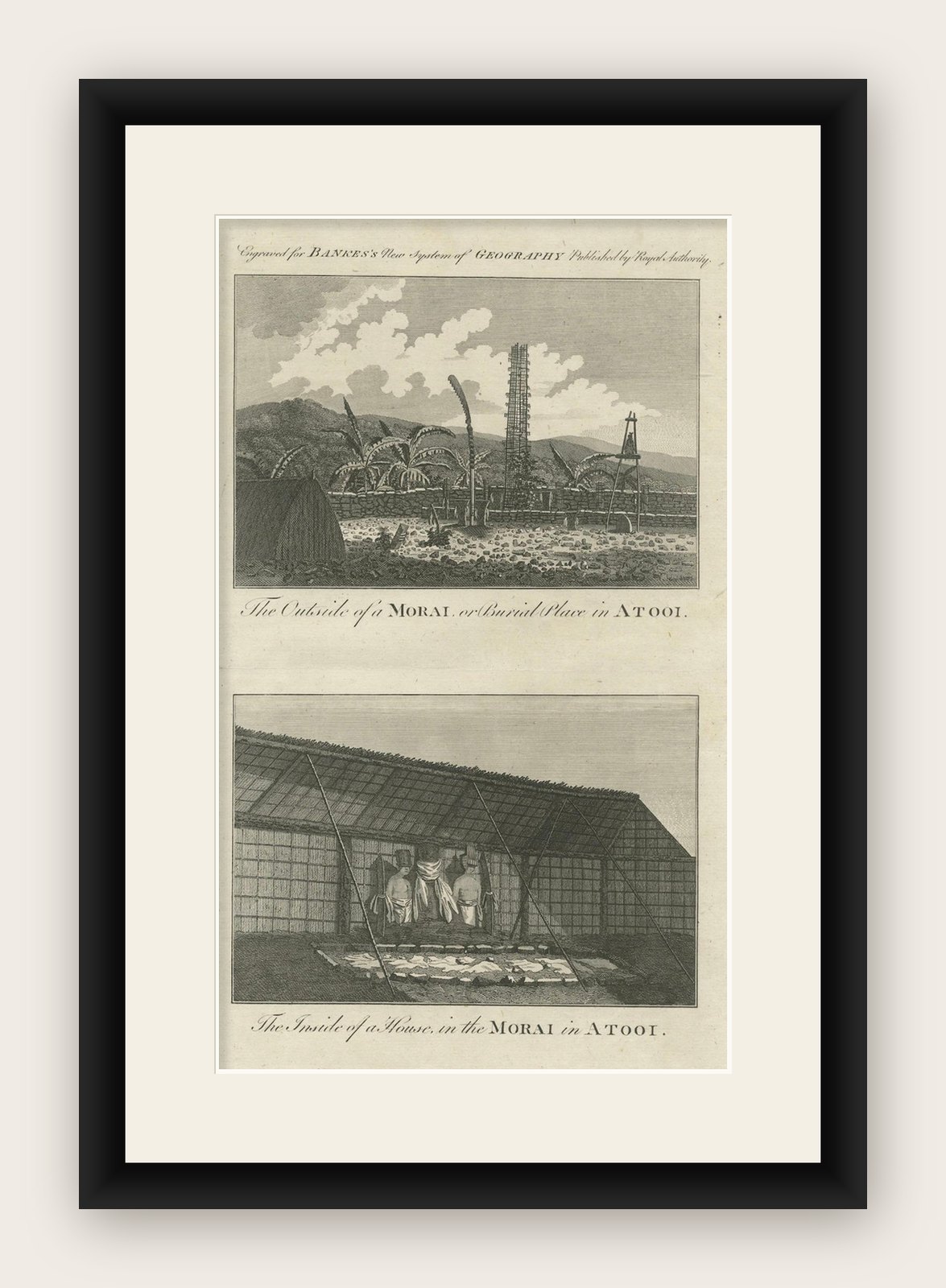
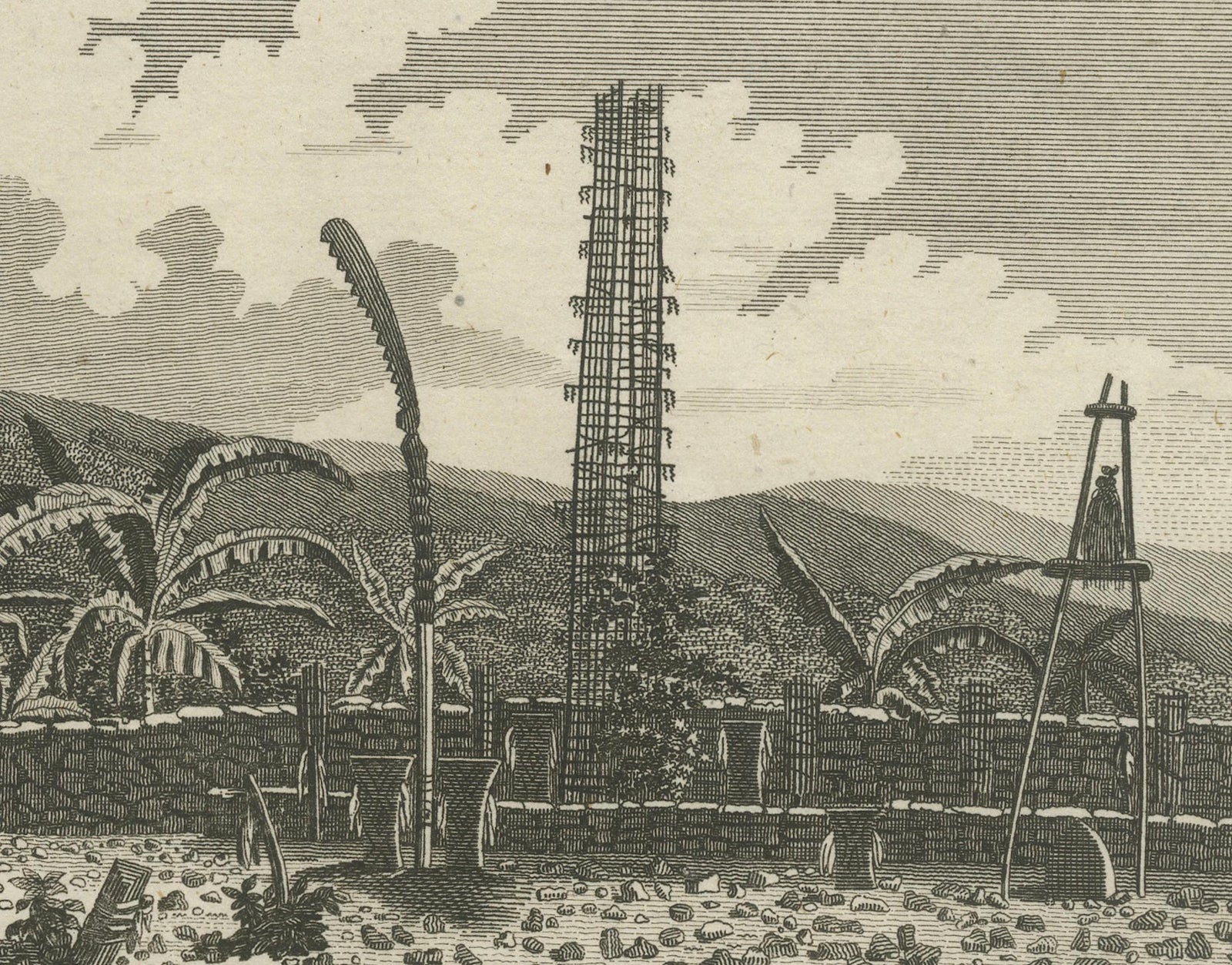
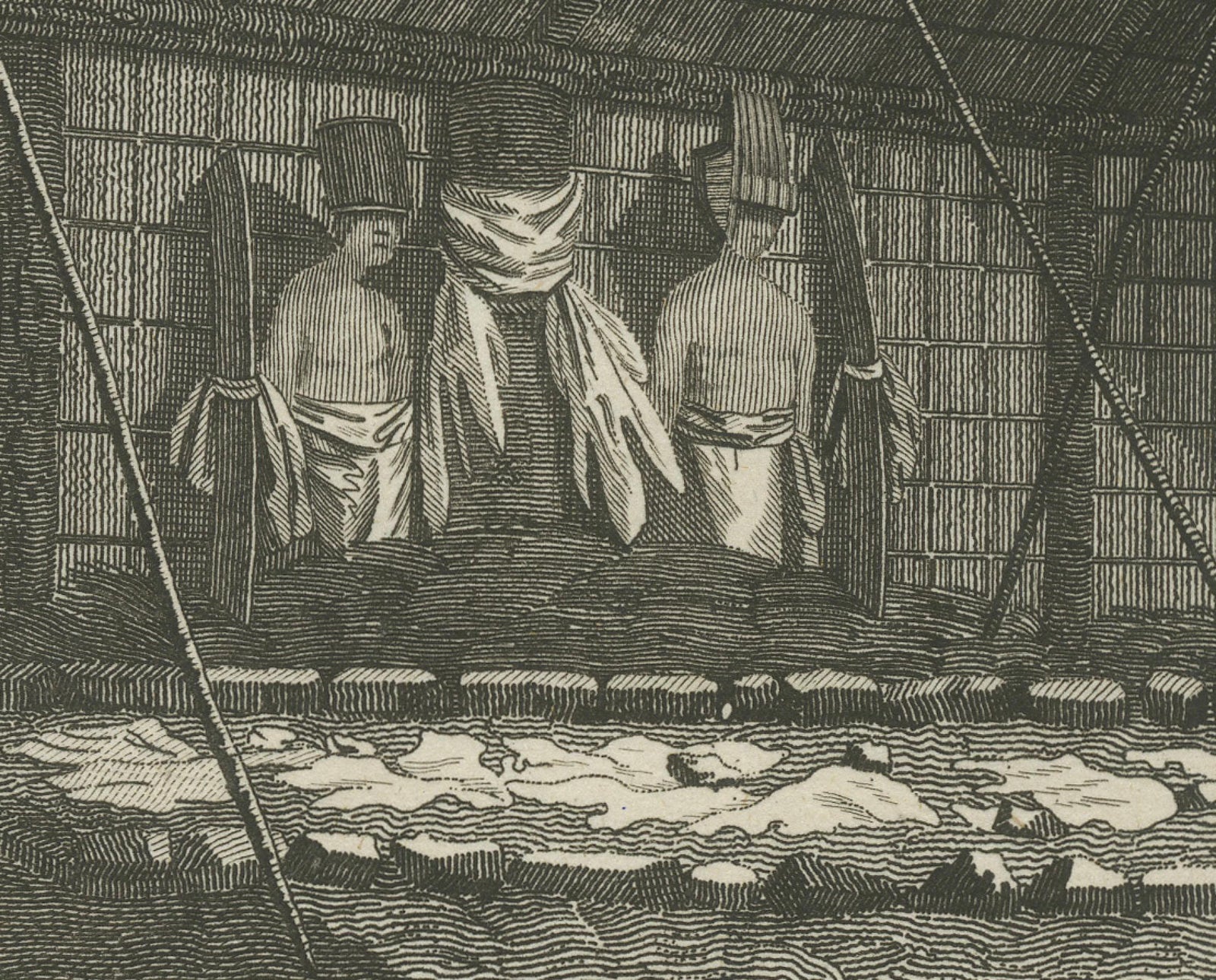
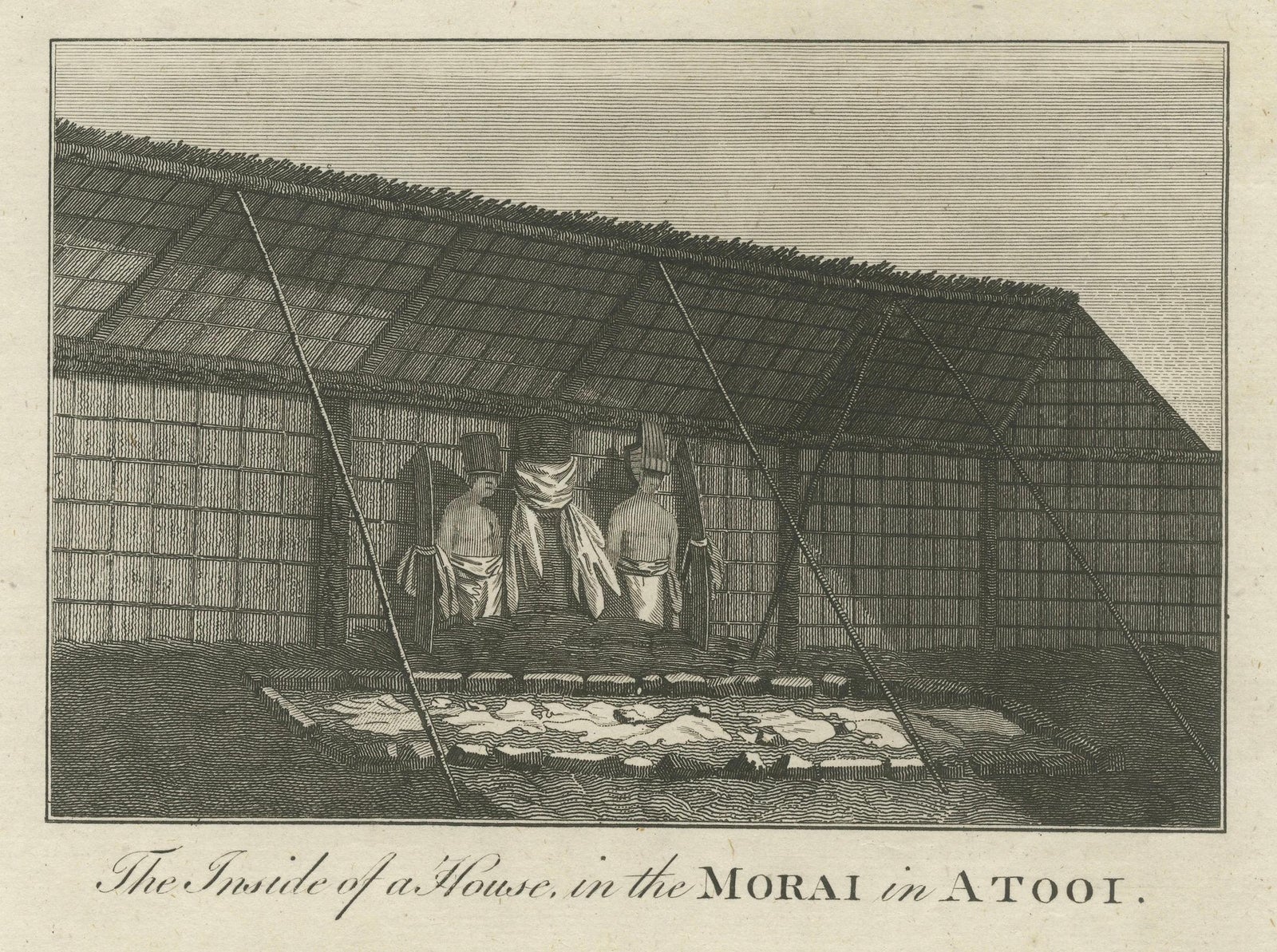
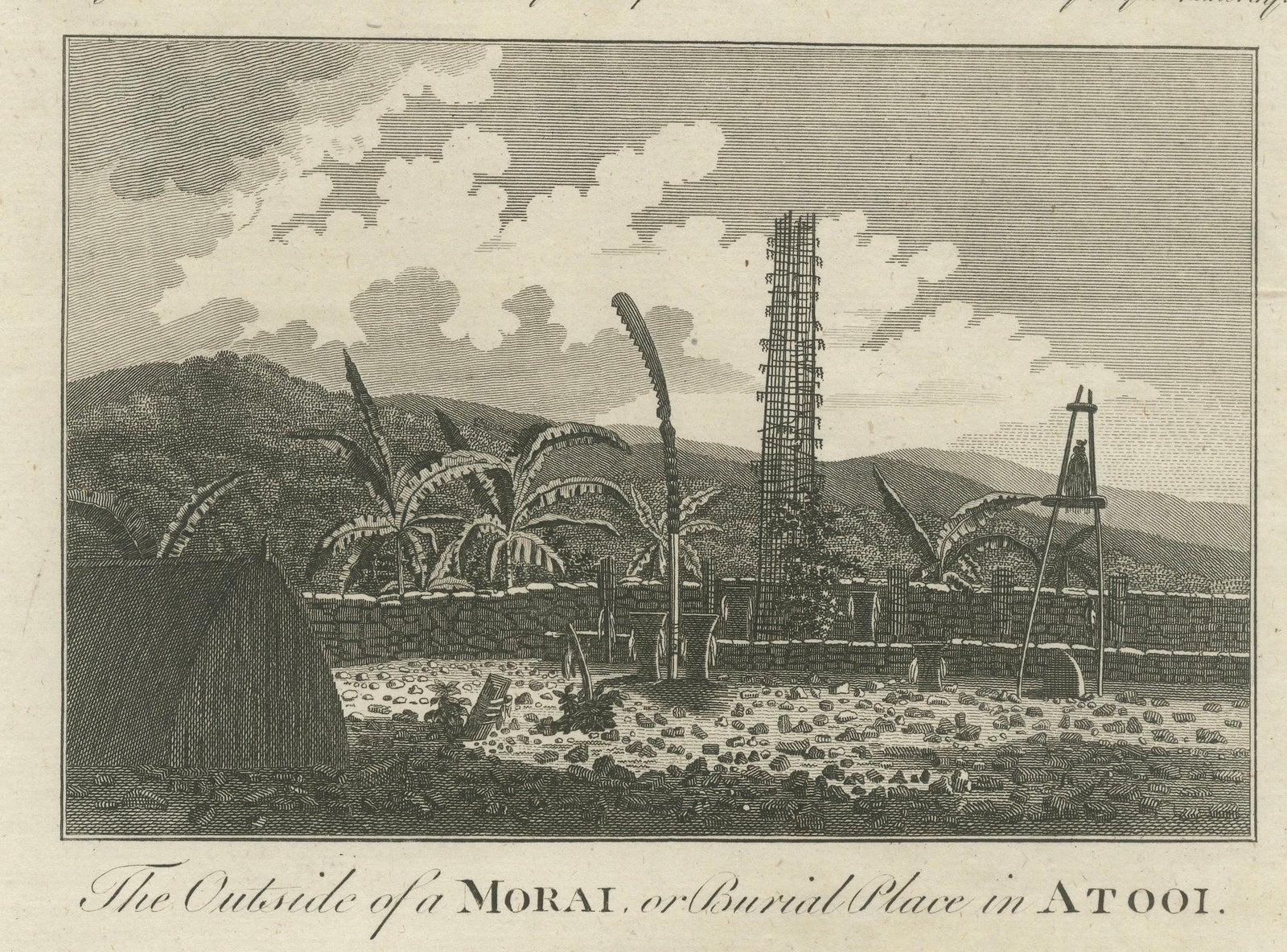
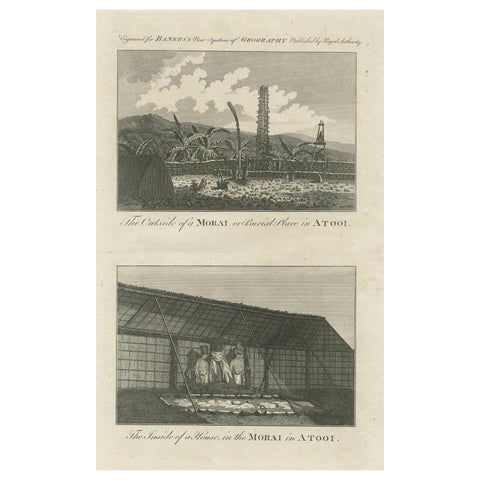
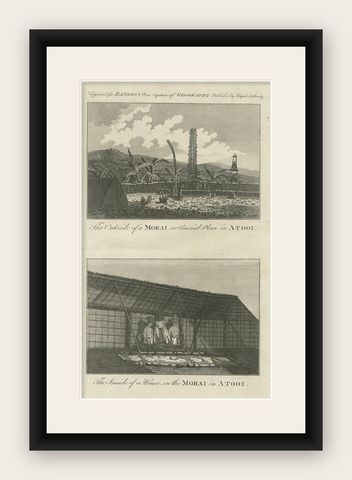
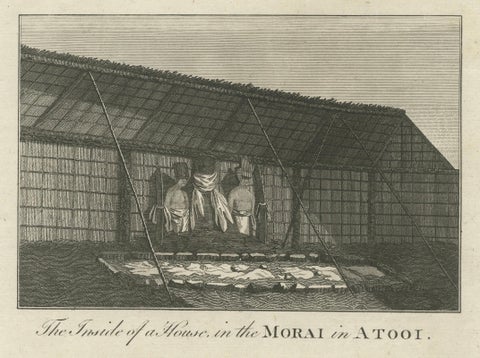
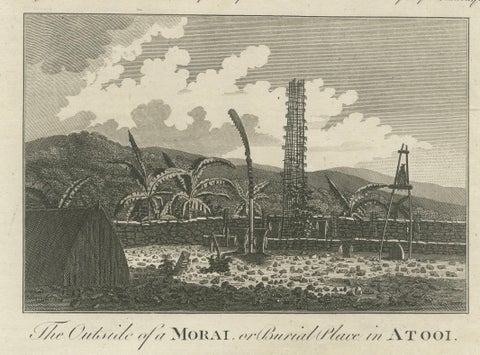
This finely executed engraving, titled "The Outside of a Morai, or Burial Place in Atooi" and "The Inside of a House, in the Morai in Atooi," offers a fascinating depiction of Hawaiian (Atooi/Kauai) ceremonial and cultural spaces. Published for 'Bankes’s New System of Geography', this print reflects the growing European interest in the Pacific islands during the late 18th century, influenced by the accounts of Captain James Cook's voyages.
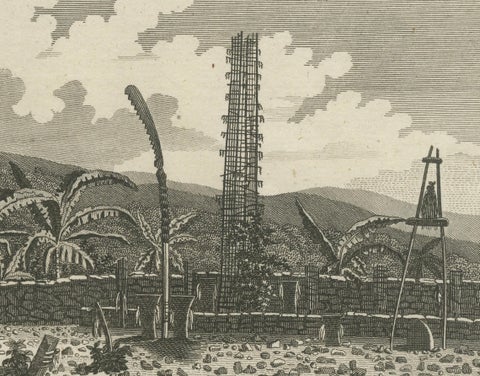
The upper panel portrays a Morai (heiau), an outdoor sacred burial site or temple used by native Hawaiians for religious and ceremonial practices. The structure features towering wooden carvings, possibly ki‘i (representations of gods), set against a lush tropical backdrop with banana trees and volcanic peaks. This detailed representation illustrates the European fascination with Polynesian spiritual sites, while also documenting architectural and cultural elements unique to the region.
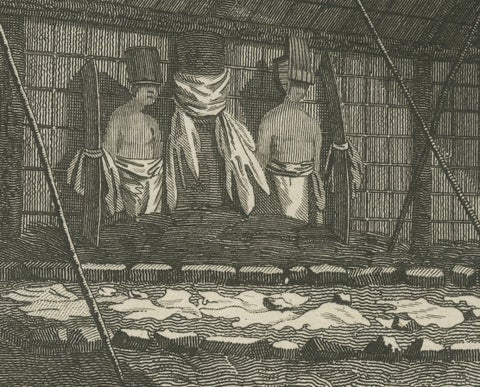
The lower panel presents the interior of a house within the Morai. The thatched roof and woven mat walls exemplify traditional Hawaiian building techniques. Three figures, likely priests or individuals of importance, stand solemnly before an altar or ceremonial arrangement. The scene highlights the ritualistic significance of such spaces and offers a rare glimpse into Hawaiian customs as perceived by European explorers.
This engraving is notable for its careful detail and cultural value, reflecting the Enlightenment-era interest in documenting the "exotic" and unfamiliar. While informed by direct observation, it must be viewed through the lens of European interpretation.
The print is in excellent condition, with clean surfaces, sharp lines, and minimal toning, making it a valuable piece for collectors of Pacific exploration and early ethnographic art.