1702 · City Views & Plans
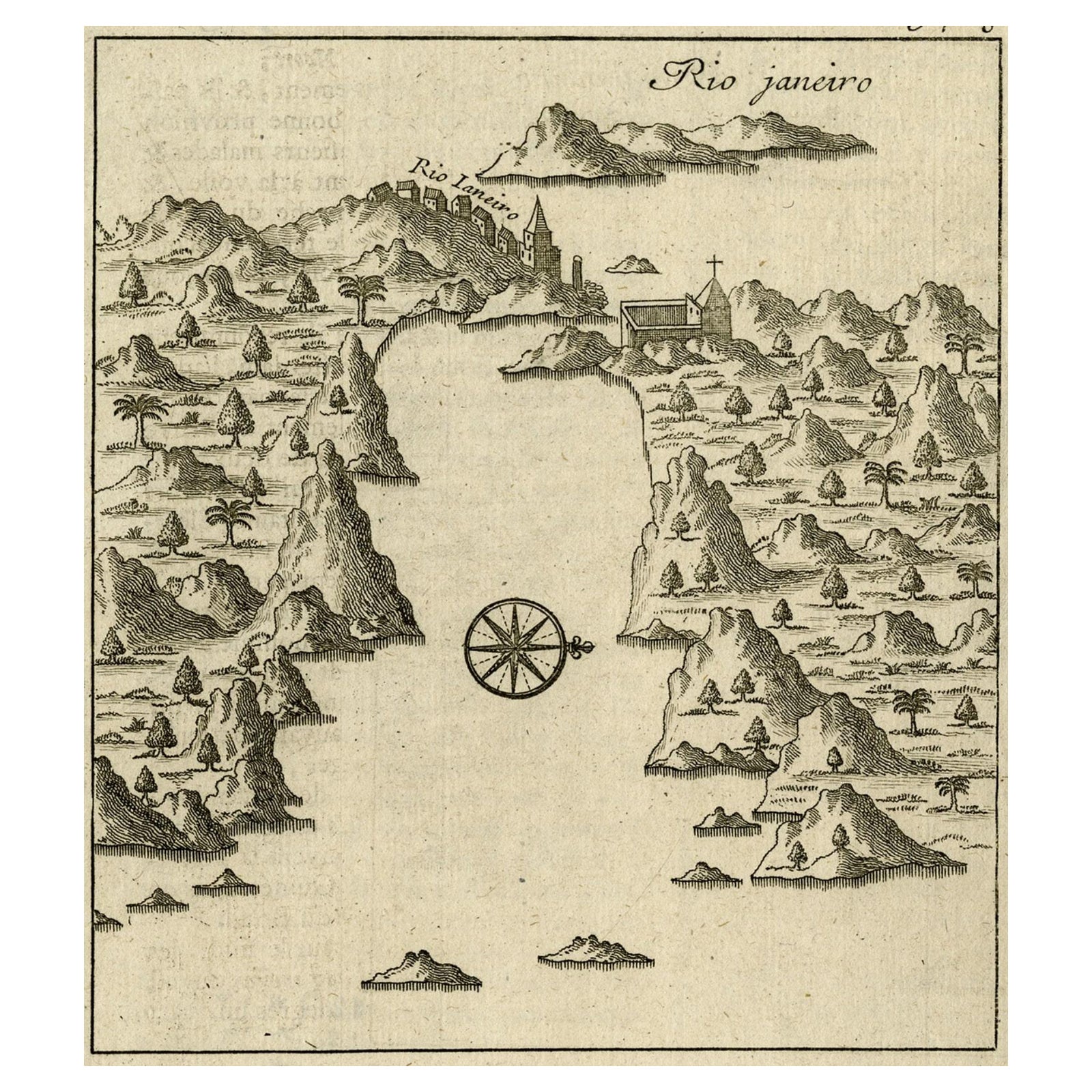
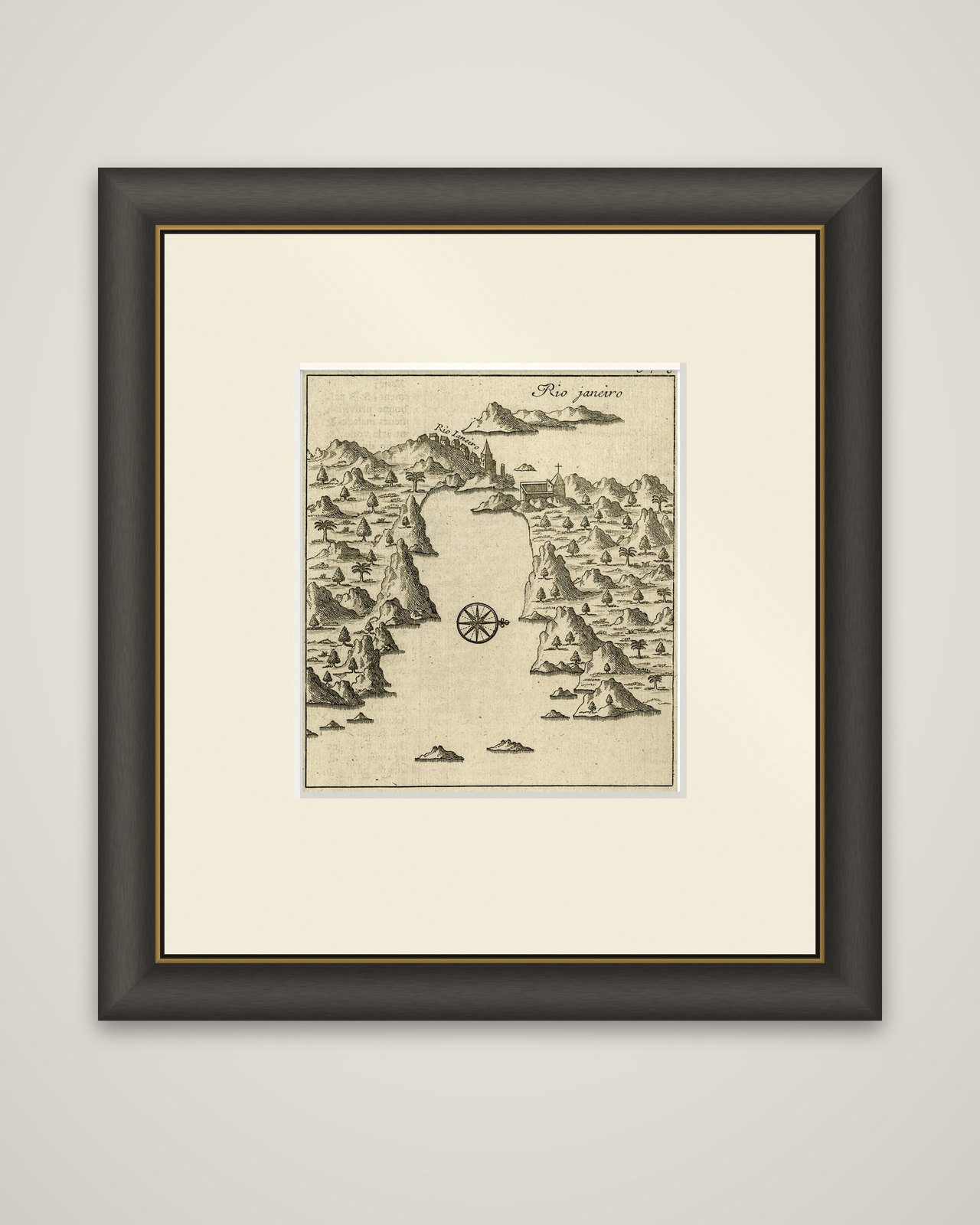
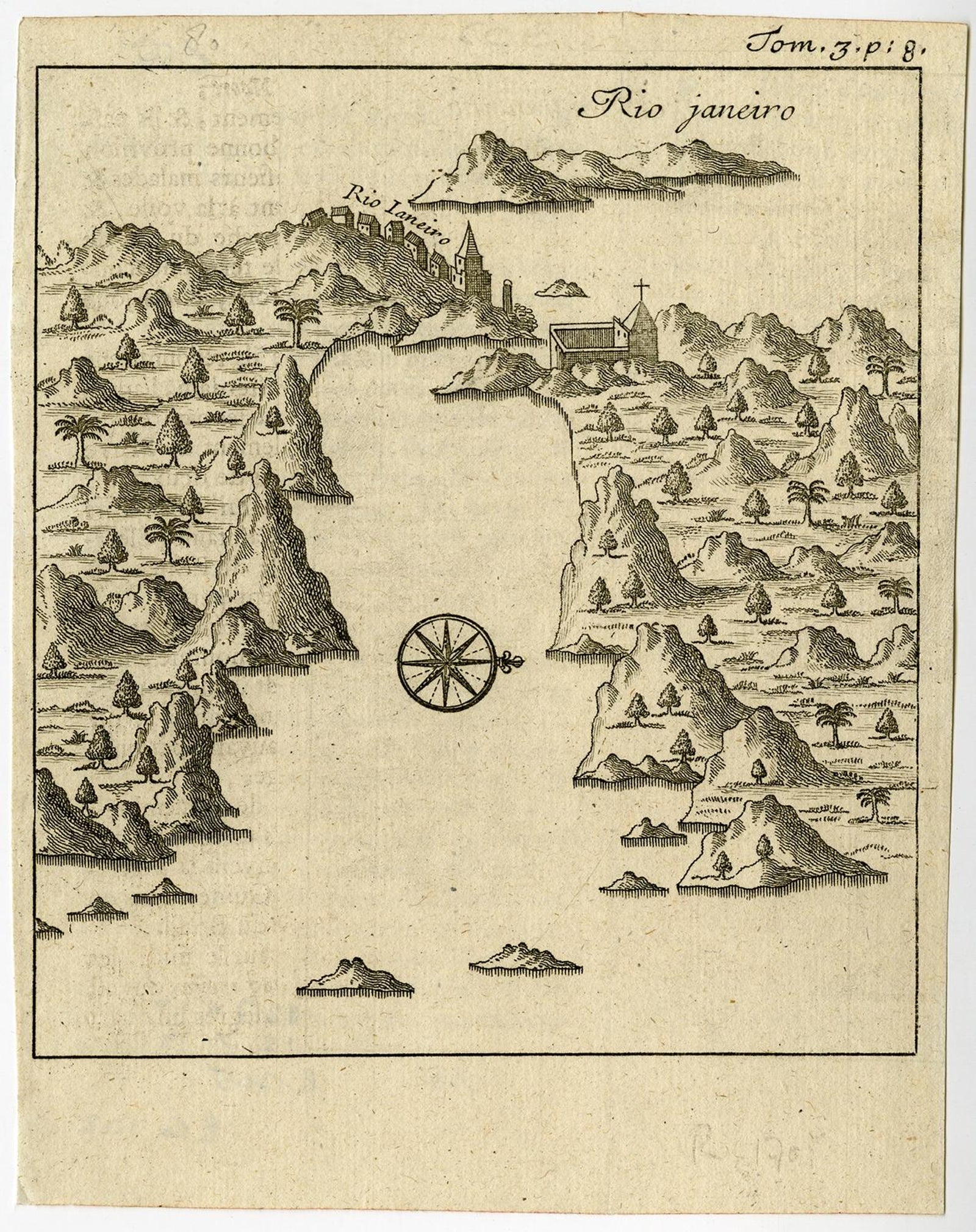
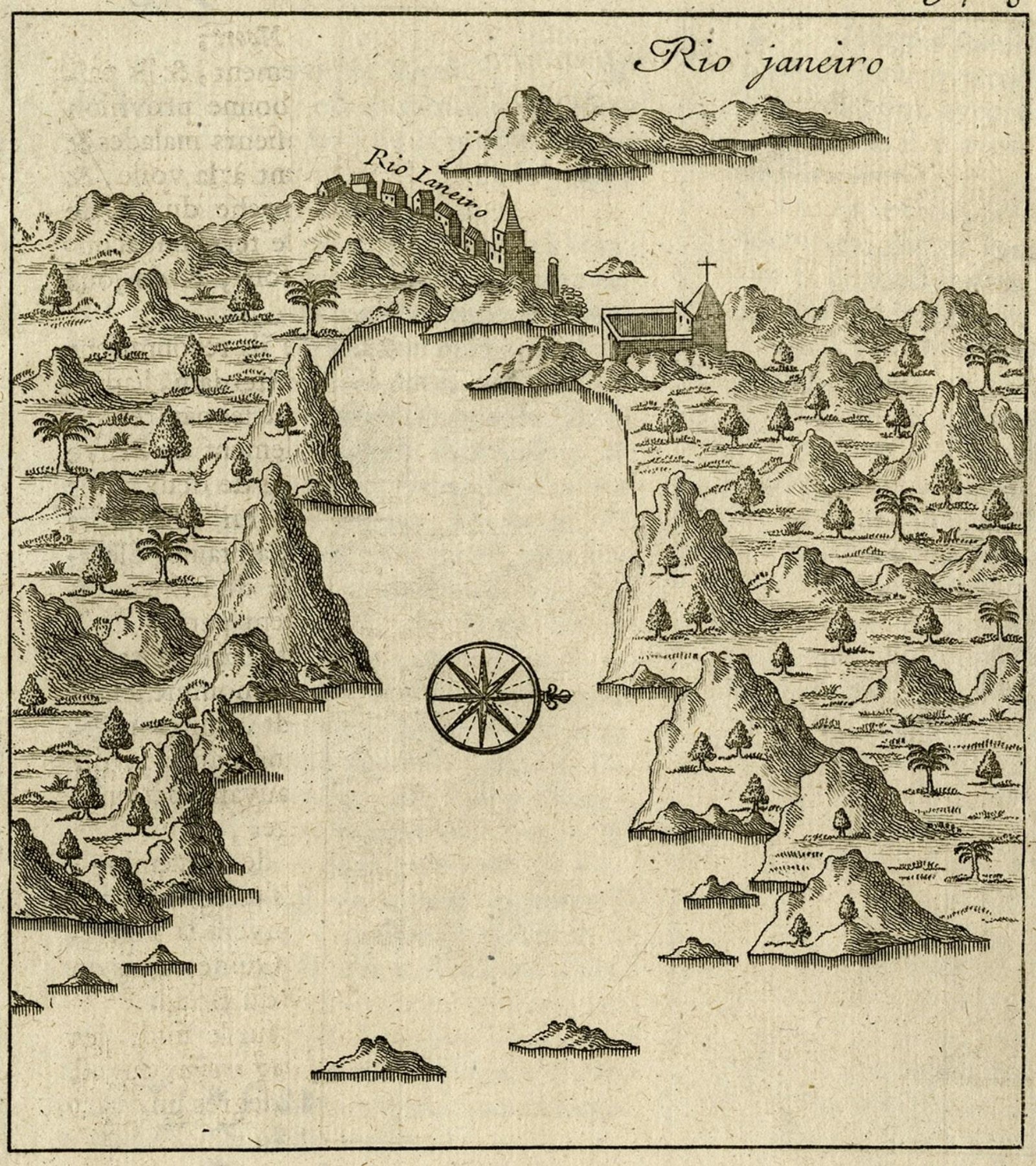
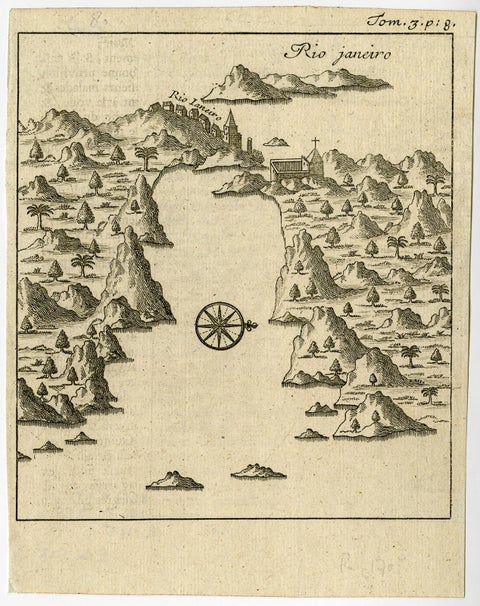
Early Bird's-Eye View of Rio Di Janeiro and Guanabara Bay, Brazil, 1702
$290
€260 · dollar price at today's exchange rate
Buy now Ask a question
Shipping to the United States: $51 standard, $73 express, insured and tracked.
- Date
- 1702
- Kind
- City Views & Plans
- Size
- 16 × 12.7 cm (6.3 × 5 in)
- Condition
- Good
- Period
- Colonial America
- Places
- Brazil
- Reference
- PCT-56562
What the condition grades mean
- Excellent
- Bright and clean, with no faults worth mentioning.
- Very good
- Only light signs of age, such as faint toning.
- Good
- Normal signs of age for a sheet of this period: toning, some foxing, small marks or neat old repairs.
- Fair
- Clear faults such as staining, tears or repairs, priced to match.
Every fault we see is written in the condition note, and the whole sheet is shown uncropped in the photos.
Guaranteed original. This is an original of the period stated, not a later reproduction or print-on-demand copy. If it is ever shown to be otherwise, we refund you in full.
Shipping to the United States. Sent from our gallery in Langweer, the Netherlands, flat between boards or rolled in a tube, and fully insured.
Delivery and import charges.
About this piece
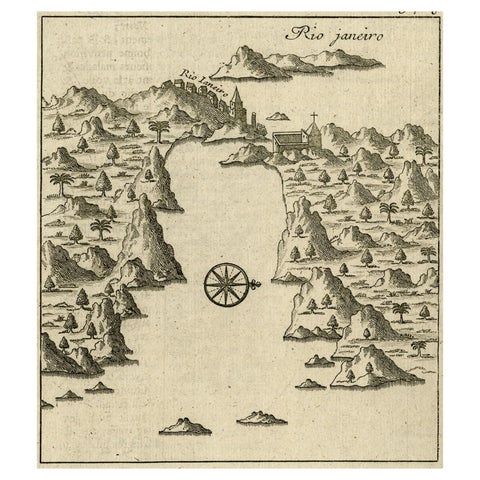
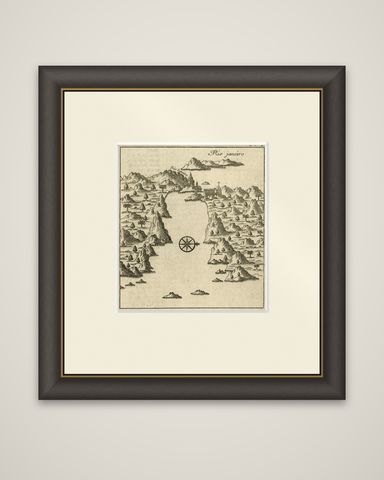
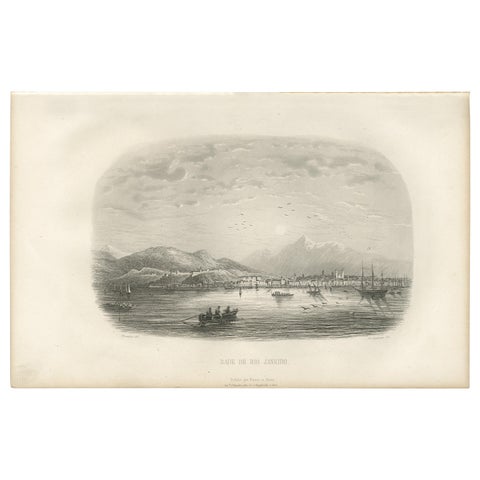
Rio Janeiro, an early bird's-eye view of Rio de Janeiro and Guanabara Bay in Brazil, an original copper engraving of 1702 from the French edition of Commelin's Recueil des voyages qui ont servi à l'établissement et aux progrès de la Compagnie des Indes Orientales, translated by Constantin de Renneville and published in Amsterdam by Estienne Roger. The title "Rio janeiro" is engraved at the top right.
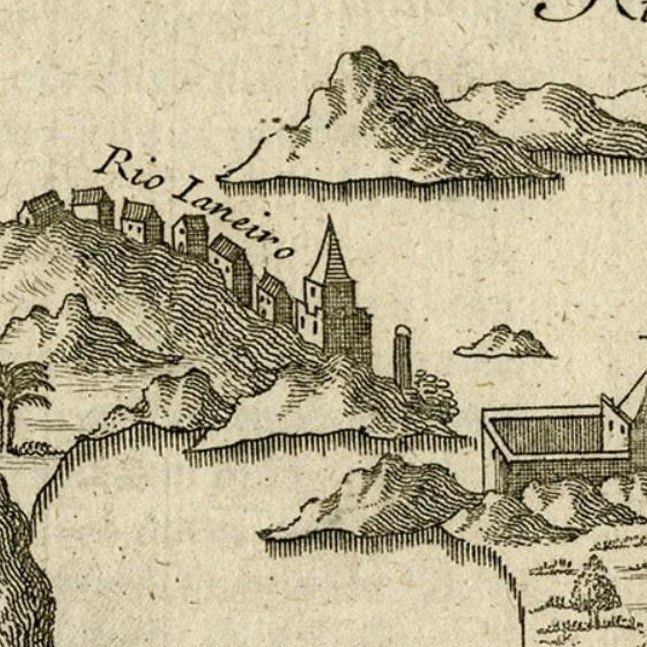
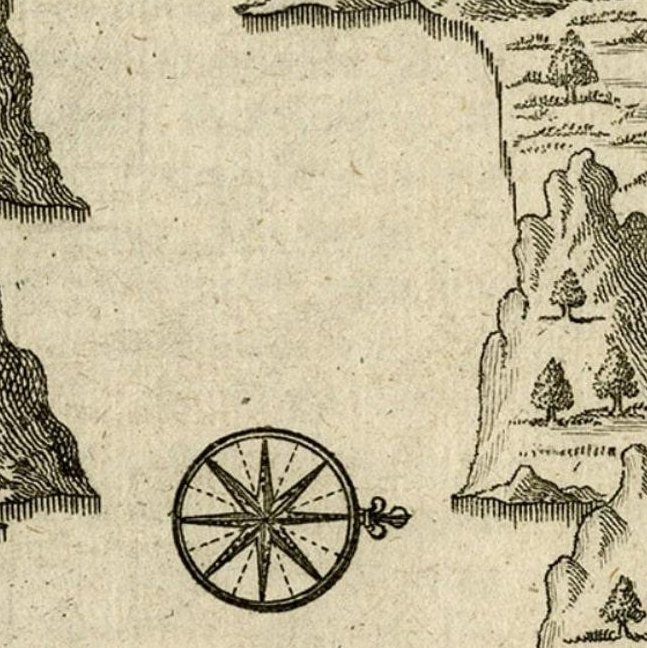
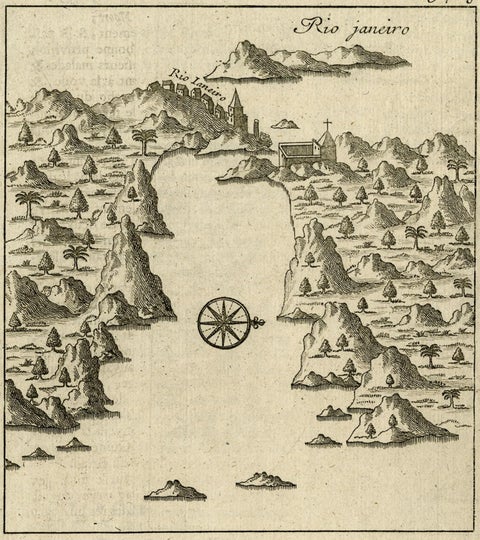
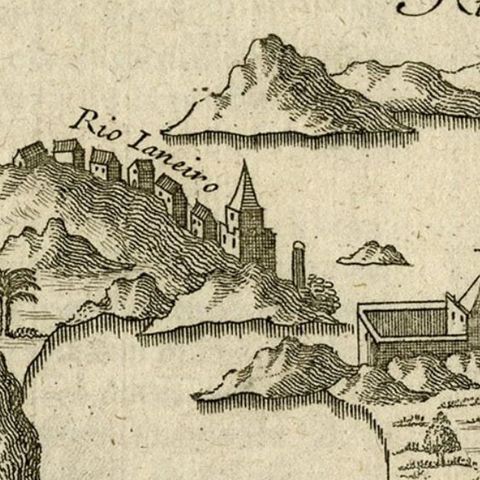
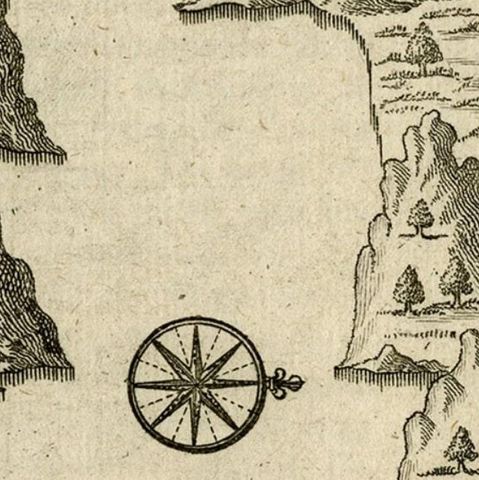
The view looks inland across the entrance to the bay, which is left blank in the center except for a compass rose. Steep, conical hills, drawn in profile, stand on both shores, and between them lie palm trees and low scrub in the lively conventions of seventeenth-century views. At the upper left the town of Rio Janeiro is labeled and shown as a row of buildings with a church spire on the ridge, and at the right a fortified building with a cross-topped church stands at the water's edge. Small islands lie in the foreground, and the text of the opposite page shows through the thin paper.
The voyage collection was a standard source on the Dutch East India Company, but included in it were the accounts of voyages that called at the port of Rio on the way to the East.