1770 · Birds, Plants & Natural History
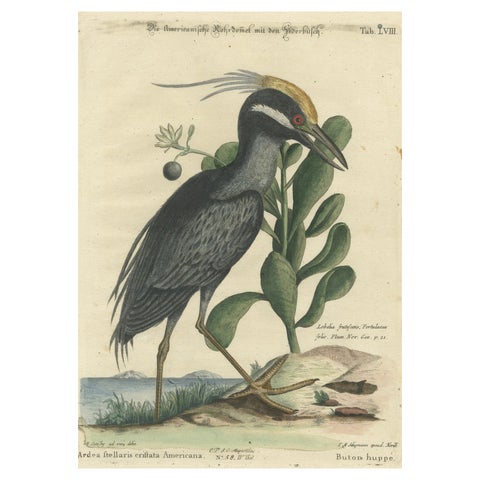
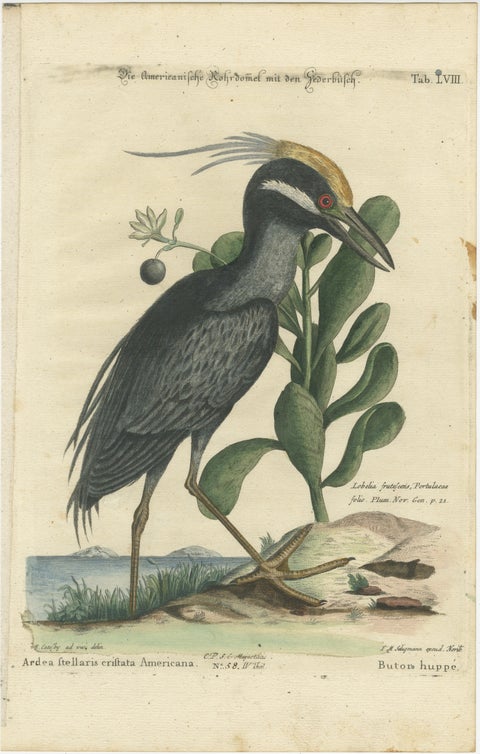
Hand-Colored Engraving of the American Crested Bittern by Seligmann, ca.1770
$695
€620 · dollar price at today's exchange rate
Buy now Ask a question
Shipping to the United States: $51 standard, $73 express, insured and tracked.
- Date
- 1770
- Maker
- Mark Catesby
- Kind
- Birds, Plants & Natural History
- Size
- 37 × 25 cm (14.6 × 9.8 in)
- Period
- Colonial America
- Reference
- BG-13989
What the condition grades mean
- Excellent
- Bright and clean, with no faults worth mentioning.
- Very good
- Only light signs of age, such as faint toning.
- Good
- Normal signs of age for a sheet of this period: toning, some foxing, small marks or neat old repairs.
- Fair
- Clear faults such as staining, tears or repairs, priced to match.
Every fault we see is written in the condition note, and the whole sheet is shown uncropped in the photos.
Guaranteed original. This is an original of the period stated, not a later reproduction or print-on-demand copy. If it is ever shown to be otherwise, we refund you in full.
Shipping to the United States. Sent from our gallery in Langweer, the Netherlands, flat between boards or rolled in a tube, and fully insured.
Delivery and import charges.
About this piece
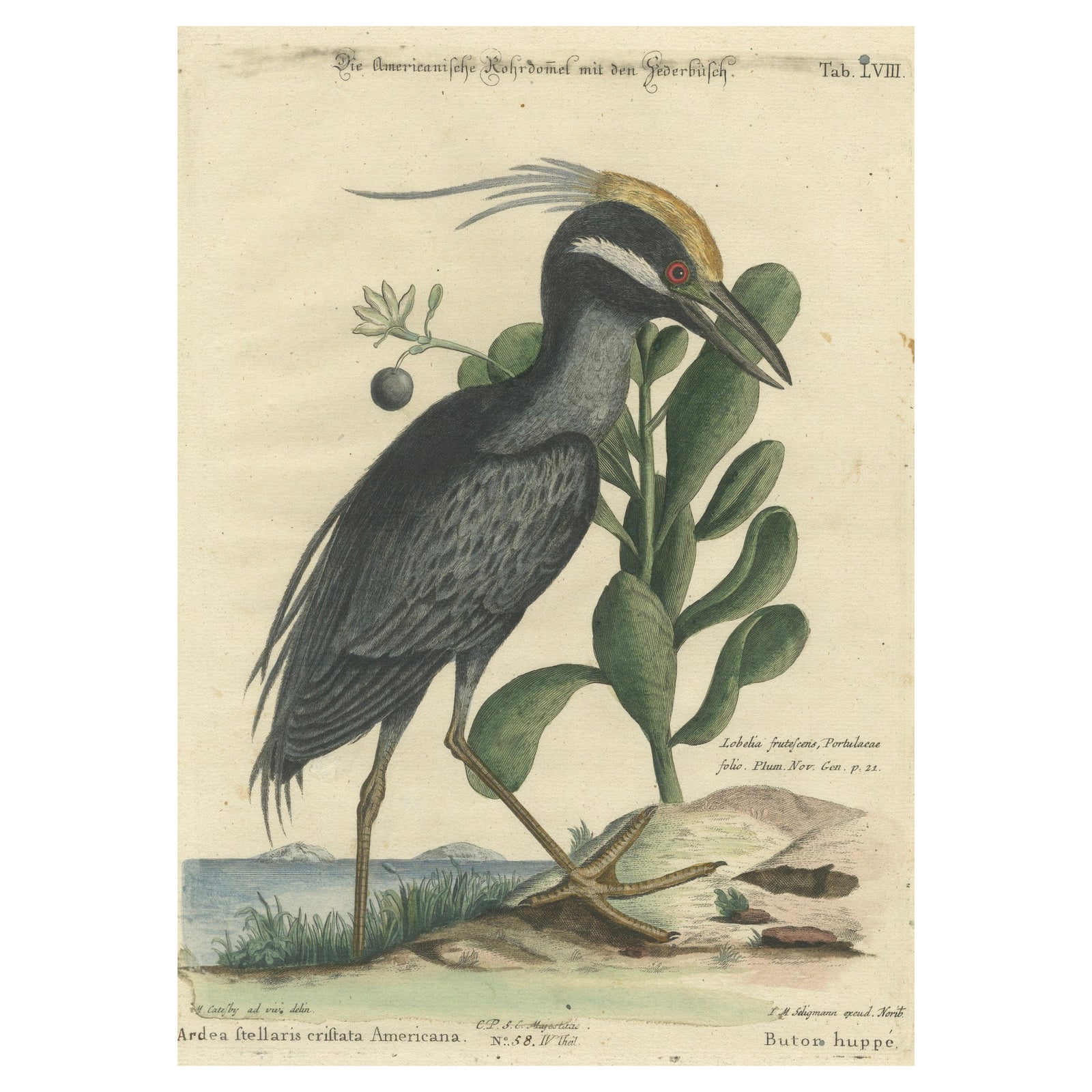
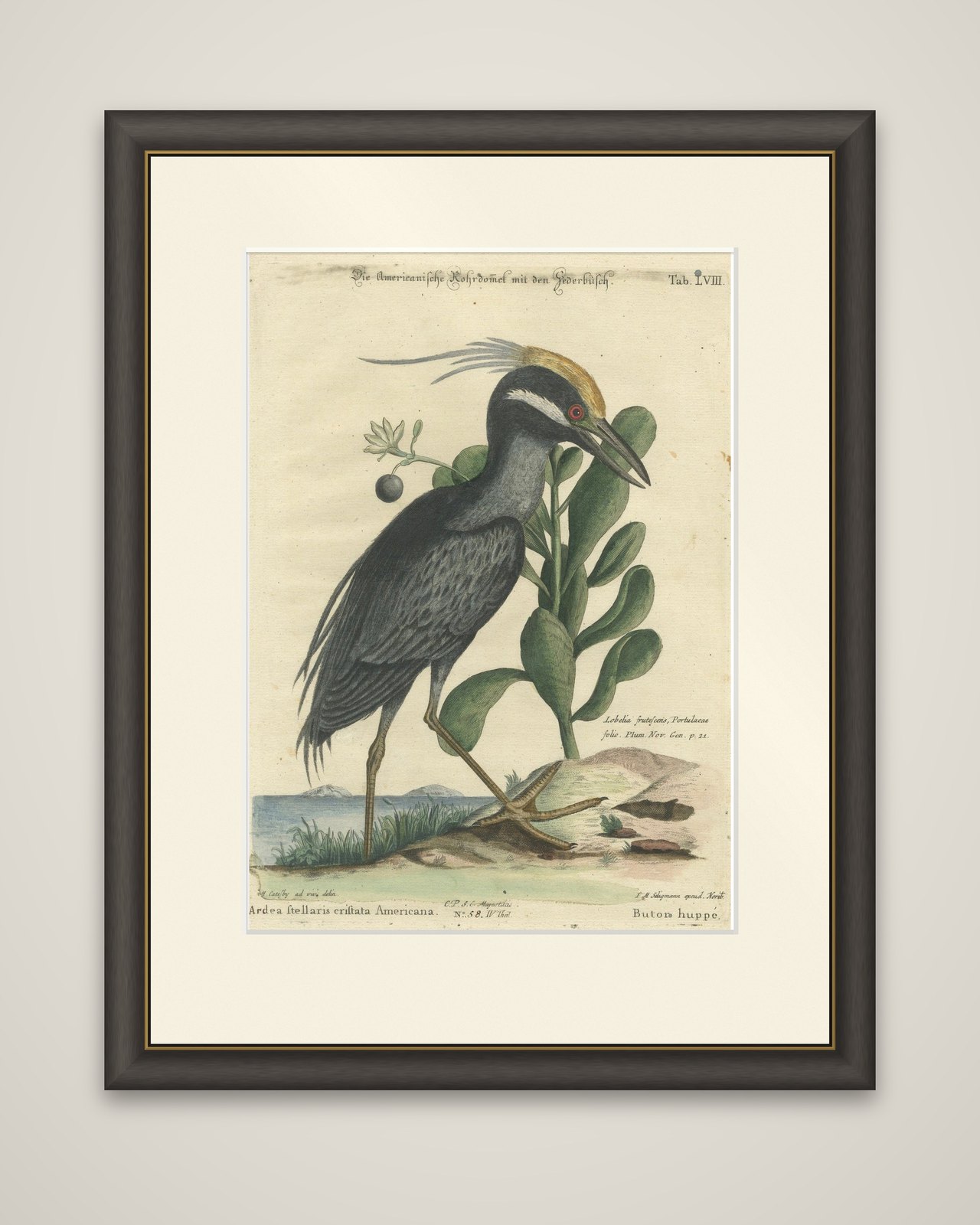
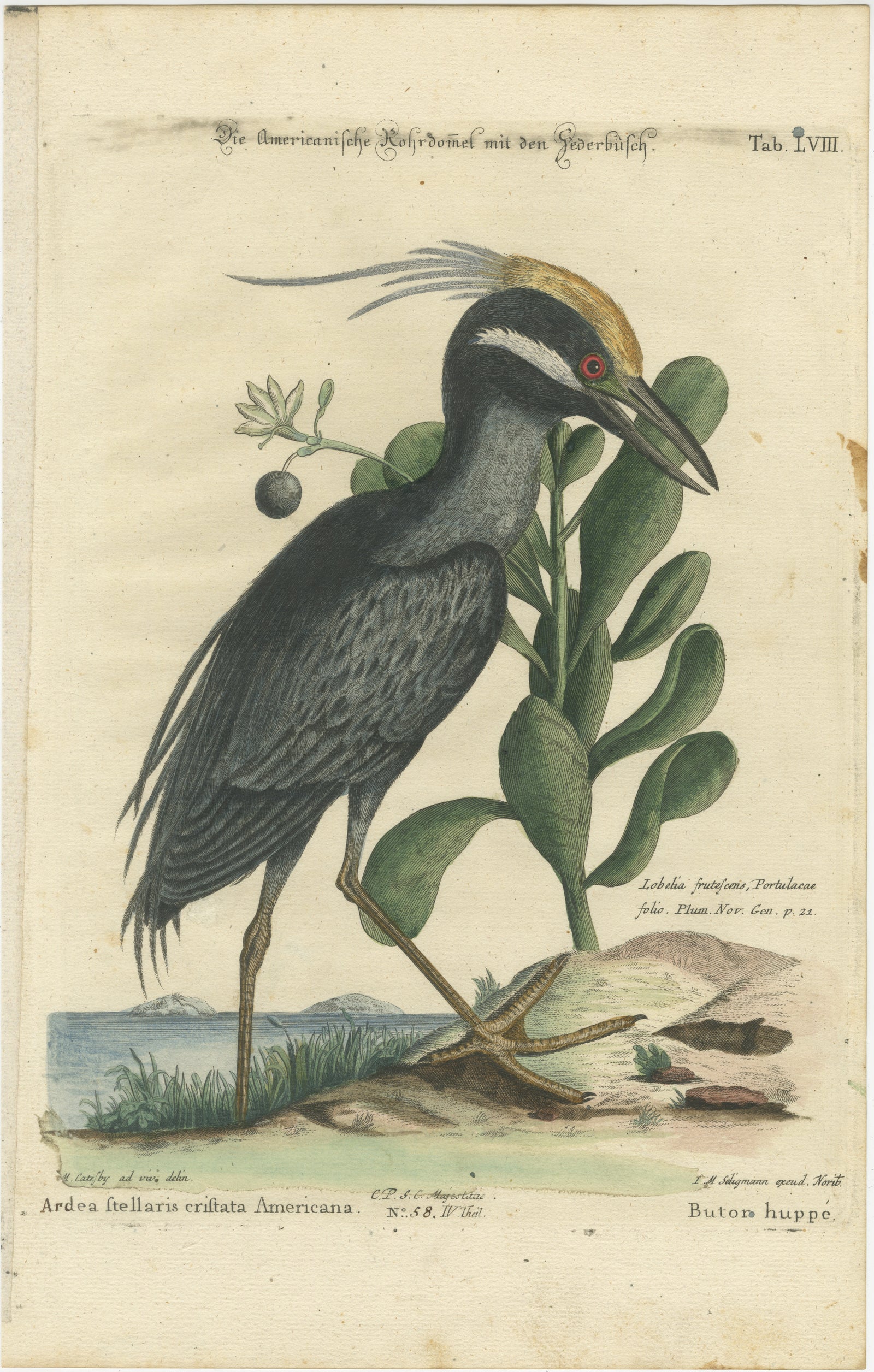
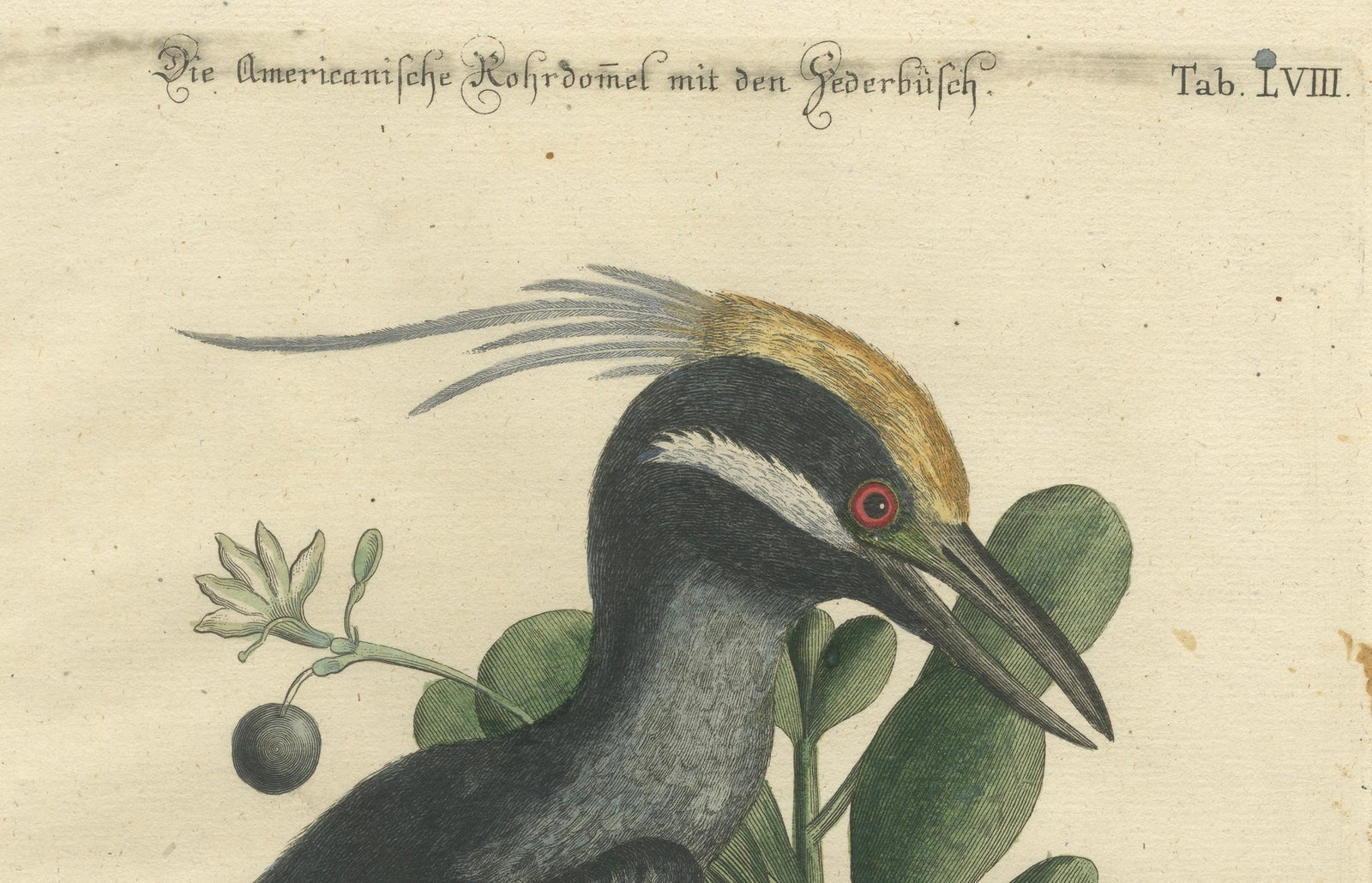
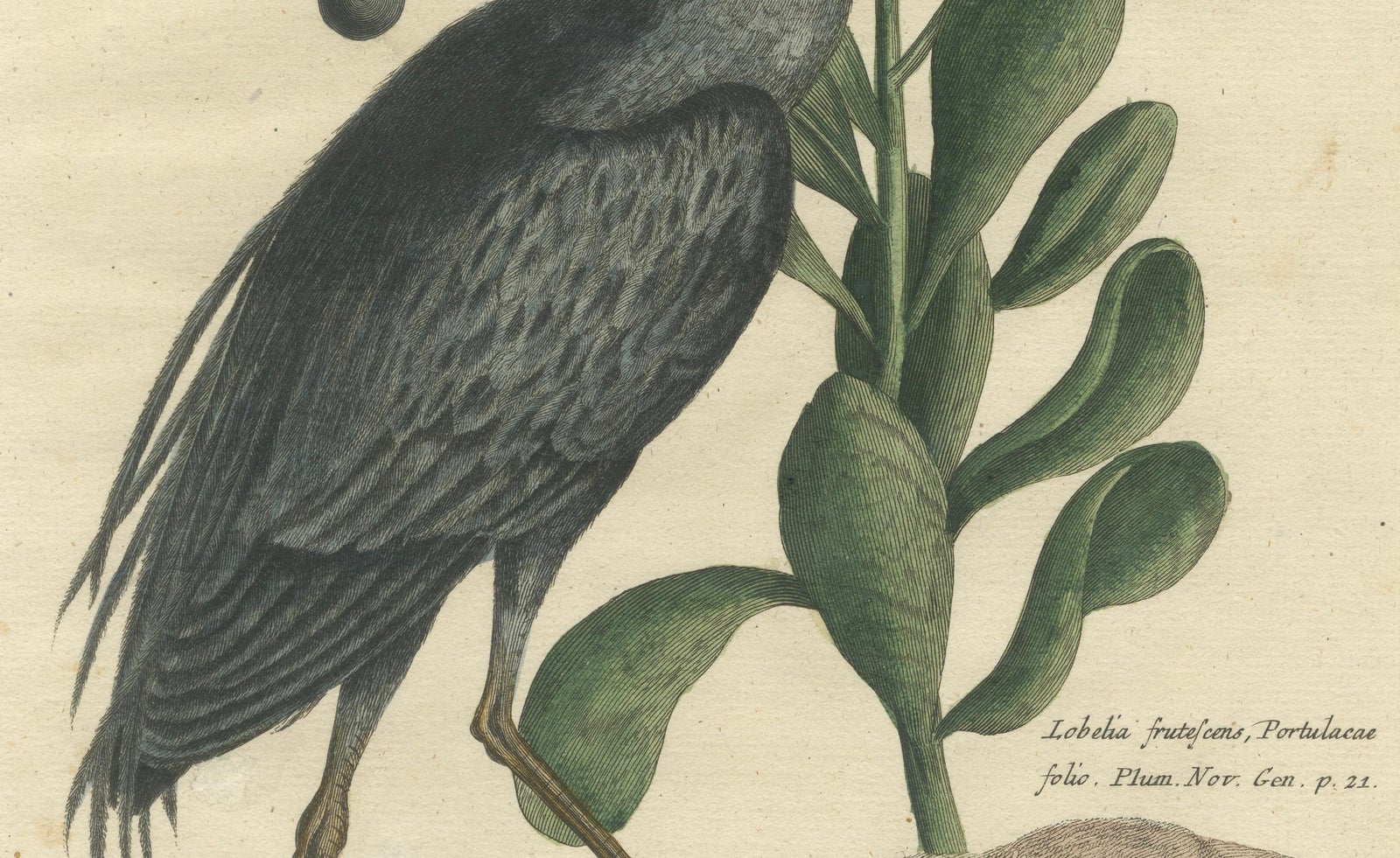
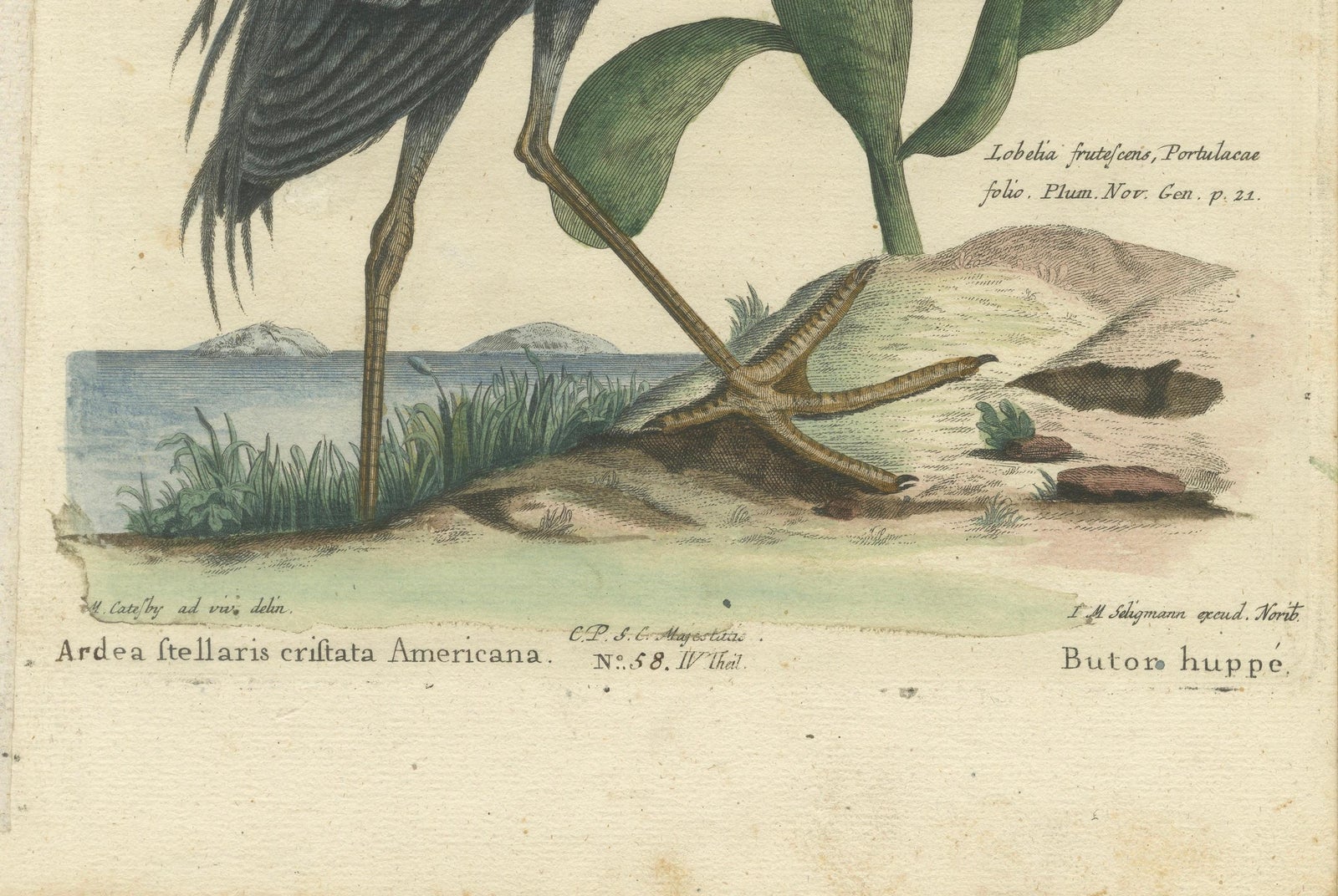
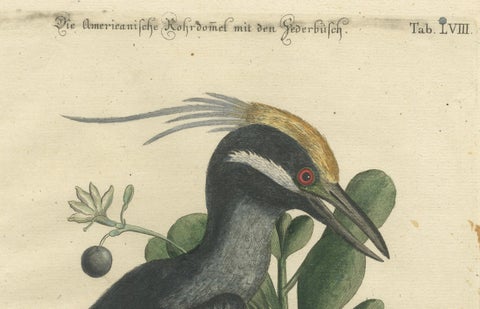
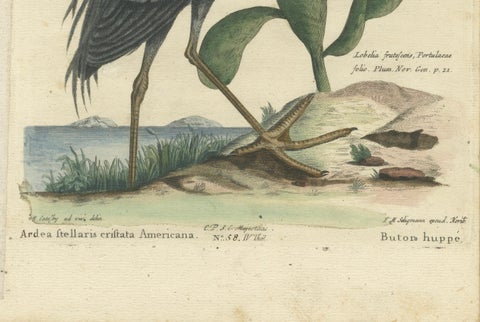
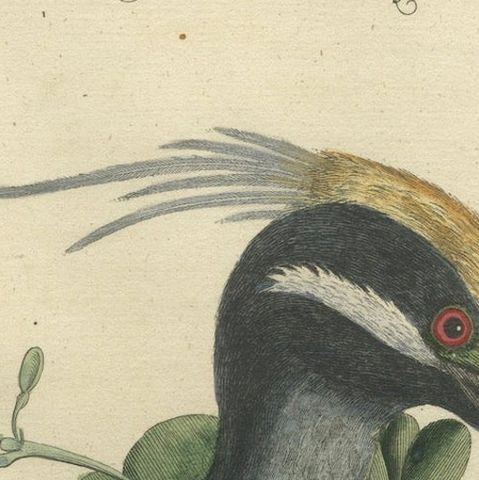
A crested heron from the American coast, titled "Die Americanische Rohrdomel mit den Federbusch", an original hand-colored copperplate engraving from Johann Michael Seligmann's Sammlung verschiedener ausländischer und seltener Vögel, Nuremberg, circa 1770. The plate is numbered "Tab. LVIII" at the upper right and lettered below with the Latin "Ardea stellaris cristata Americana", "N° 58 IV Theil" and the French "Butor huppé", with the credit "M. Catesby ad vivum delin." at the lower left.
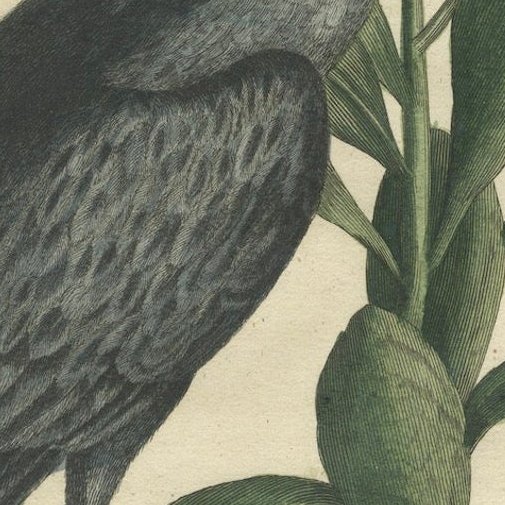
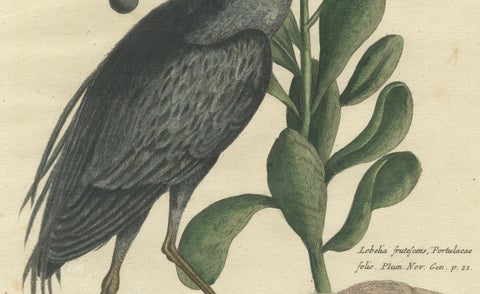
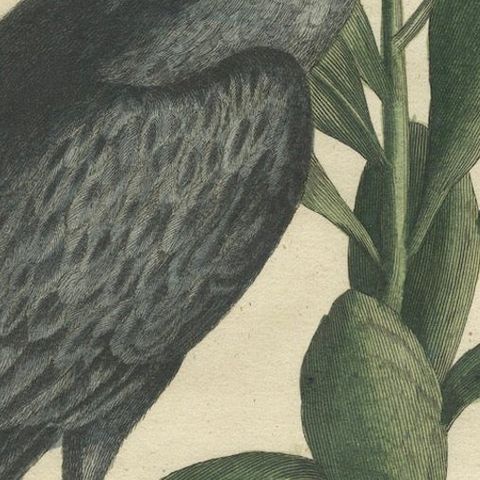
The bird is shown in a striding pose, one foot raised, against a shoreline. Its body is slate gray with dark feathering on the wing, and the head is black with a broad white stripe behind the eye, a red eye, a yellowish-orange crown and a thin white plume trailing back from the head. The legs and long toes are yellow-brown. Behind it, a leafy plant with thick oval leaves carries a white flower and a dark round fruit, and a small label at the right names it "Lobelia frutescens, Portulacae folio. Plum. Nov. Gen. p. 21". At the left, blue water and low hills lie behind a bank of grass.
Mark Catesby often paired his birds with the plants they were found among, and Seligmann's edition kept the pairing, with the plant citations for Plumier's work giving the reader a reference to follow.