1770 · Birds, Plants & Natural History
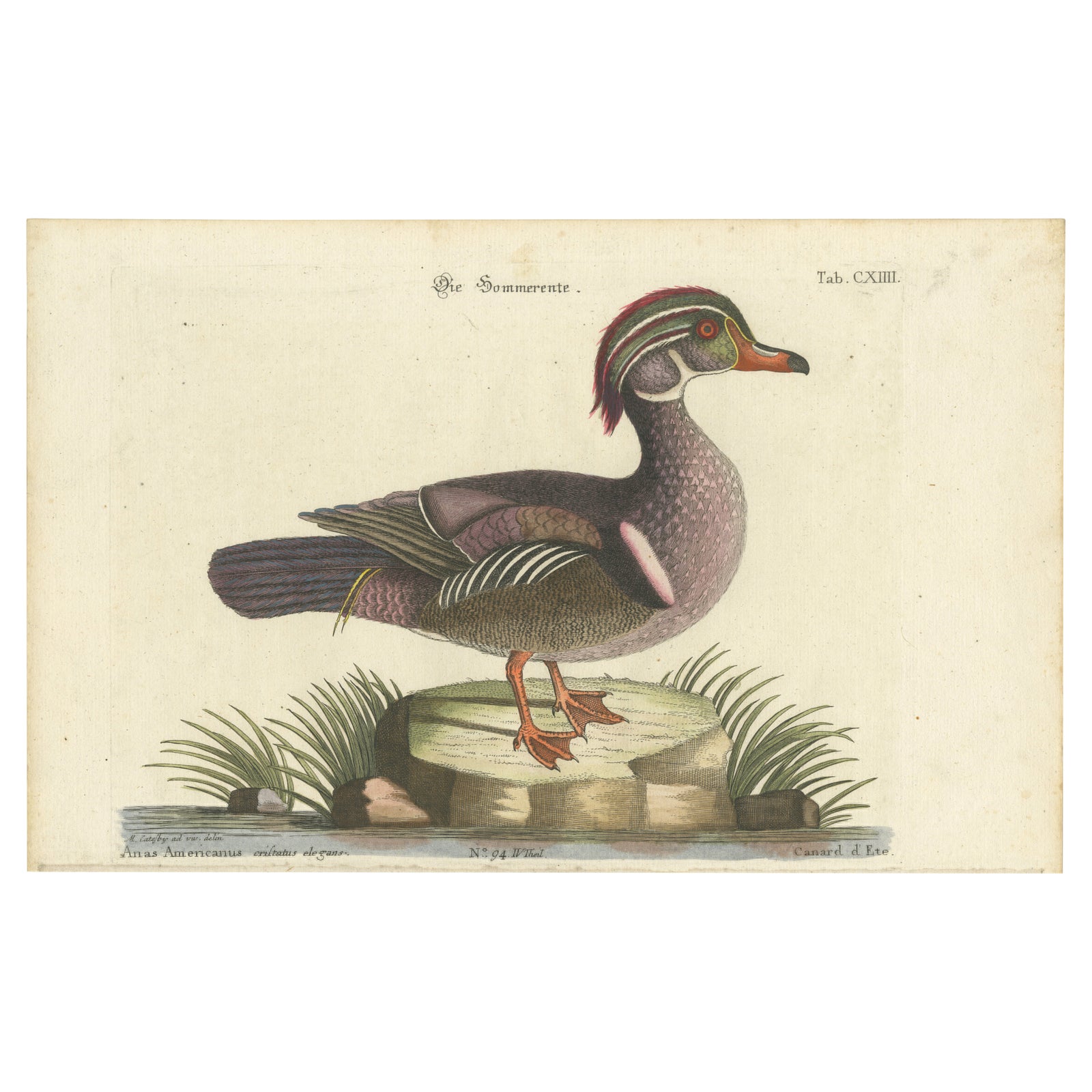
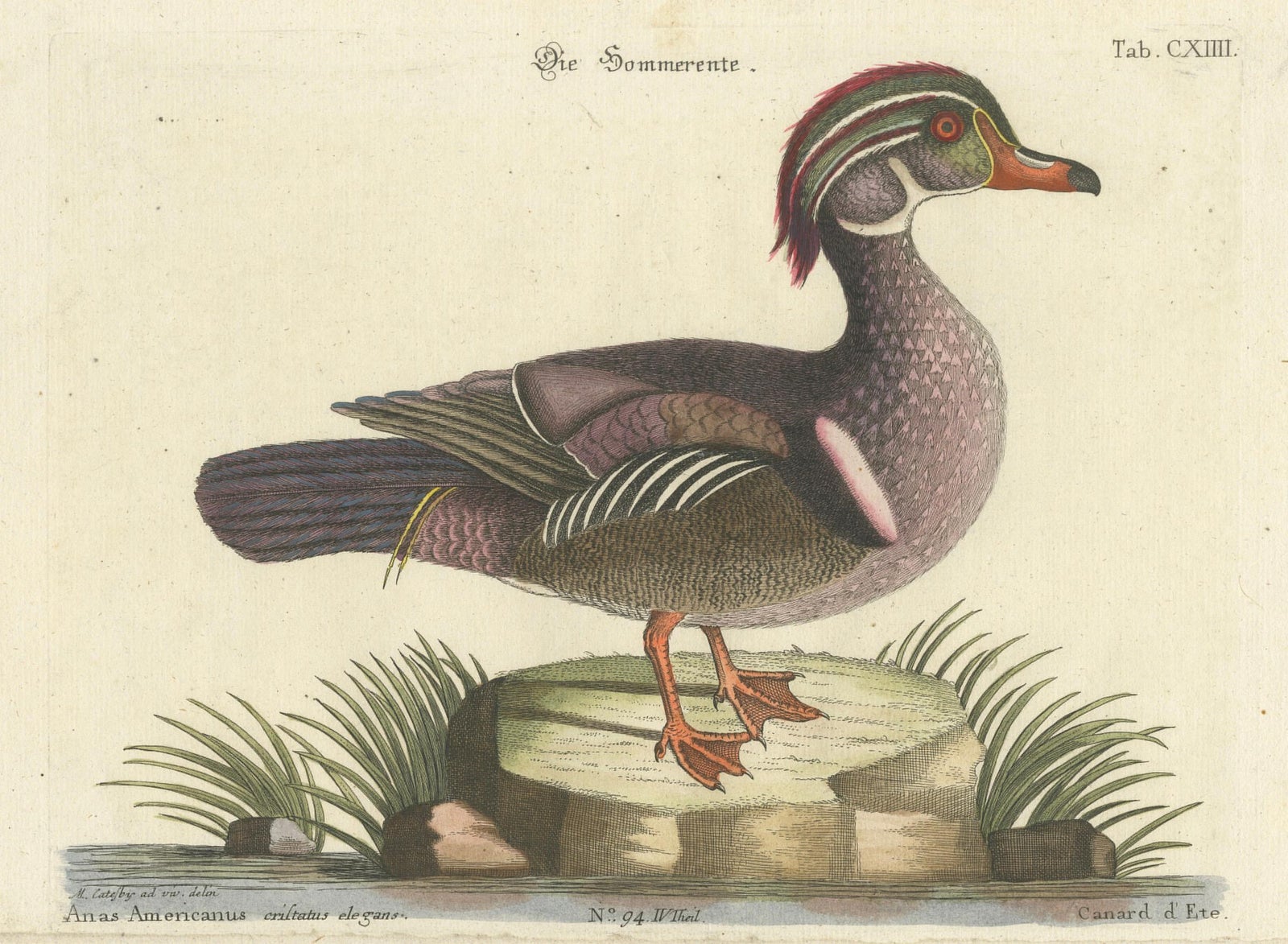
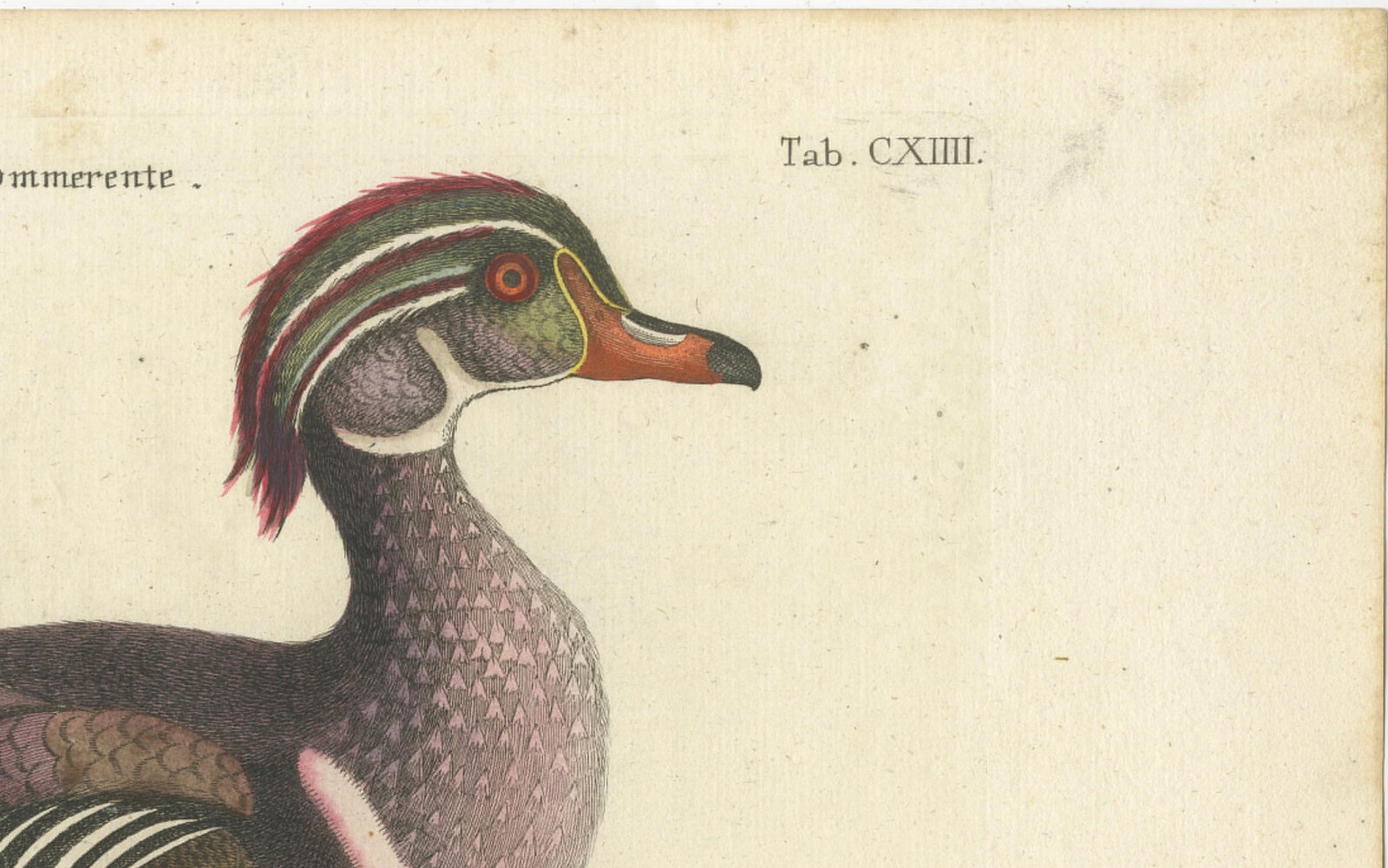
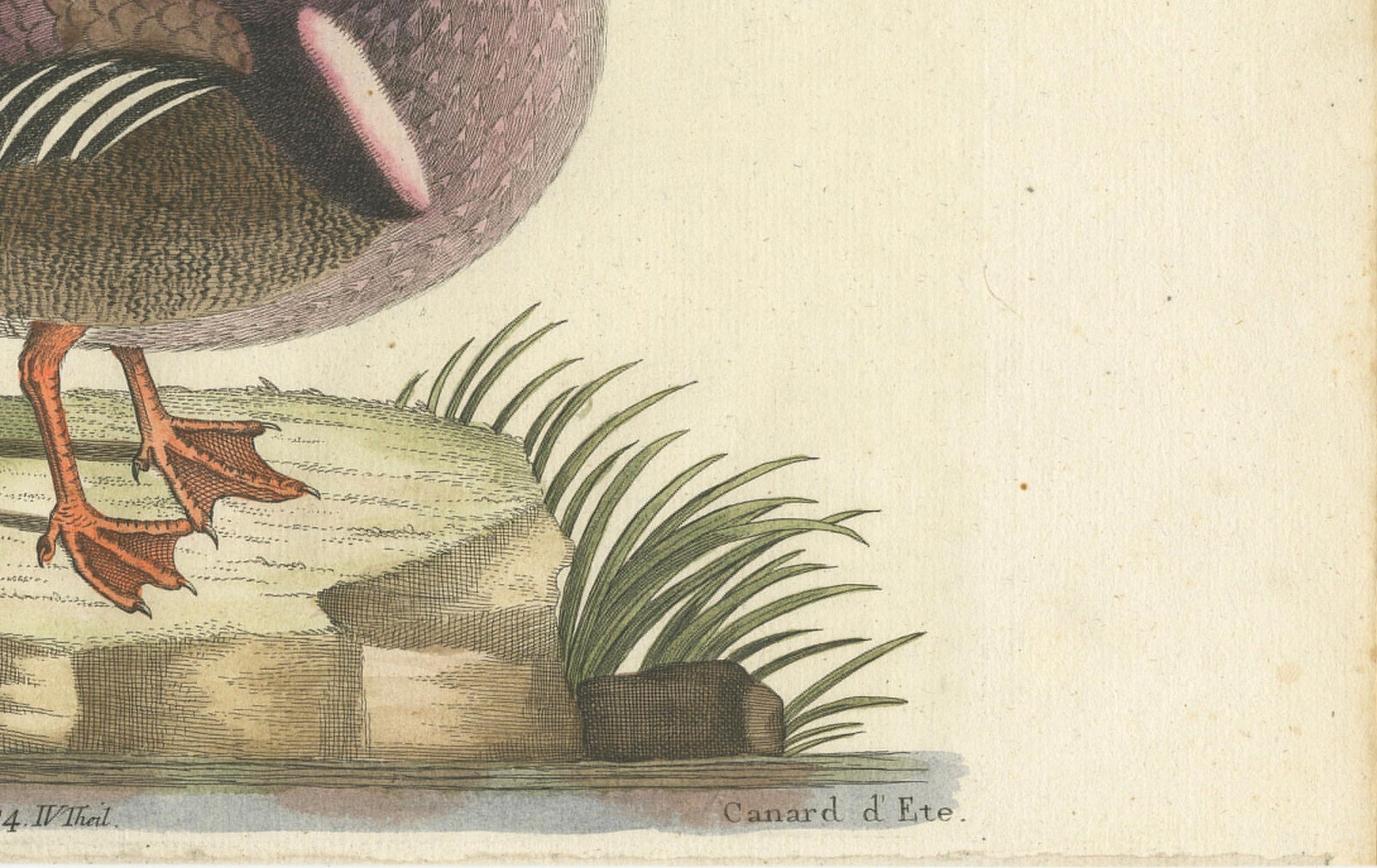
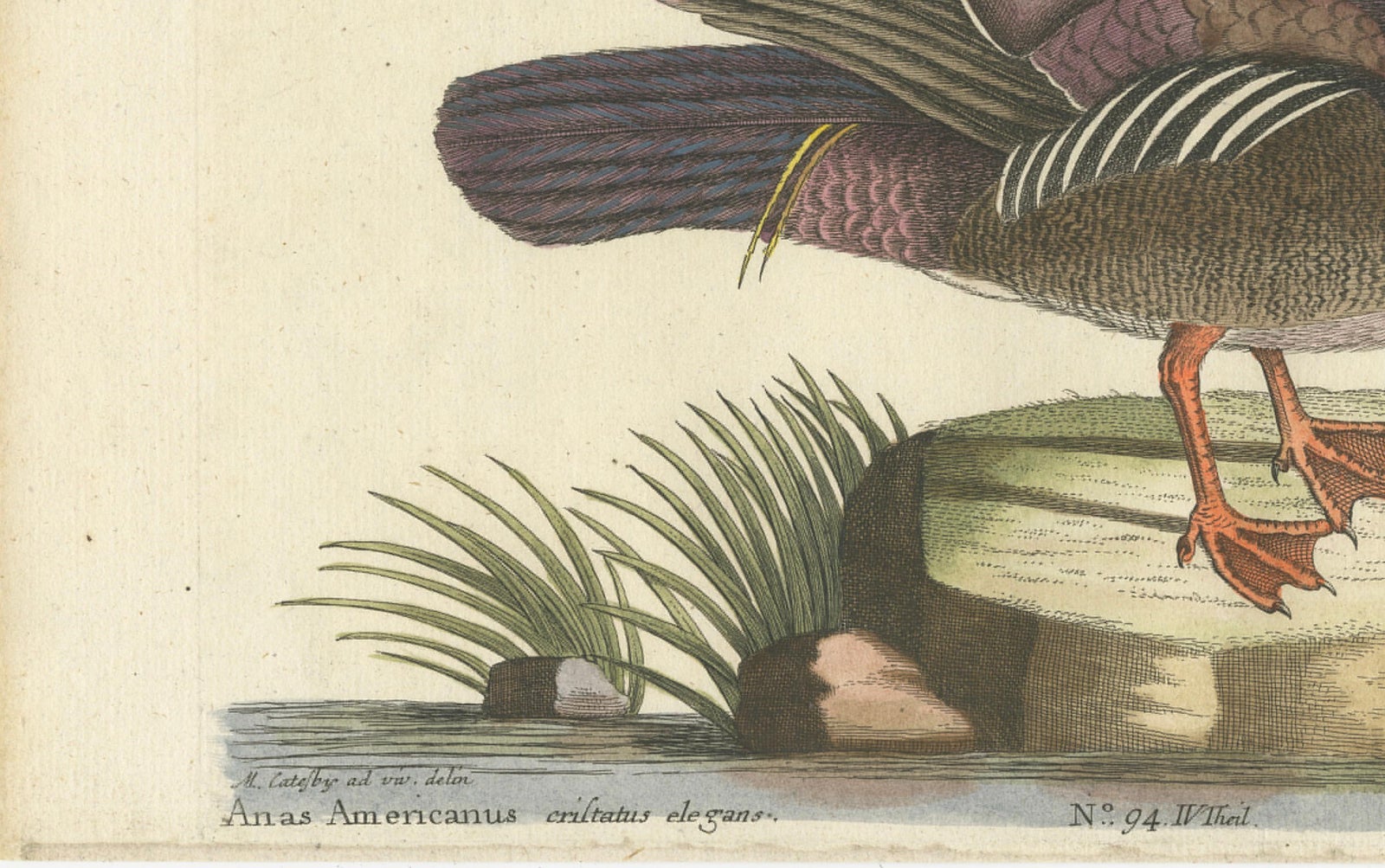
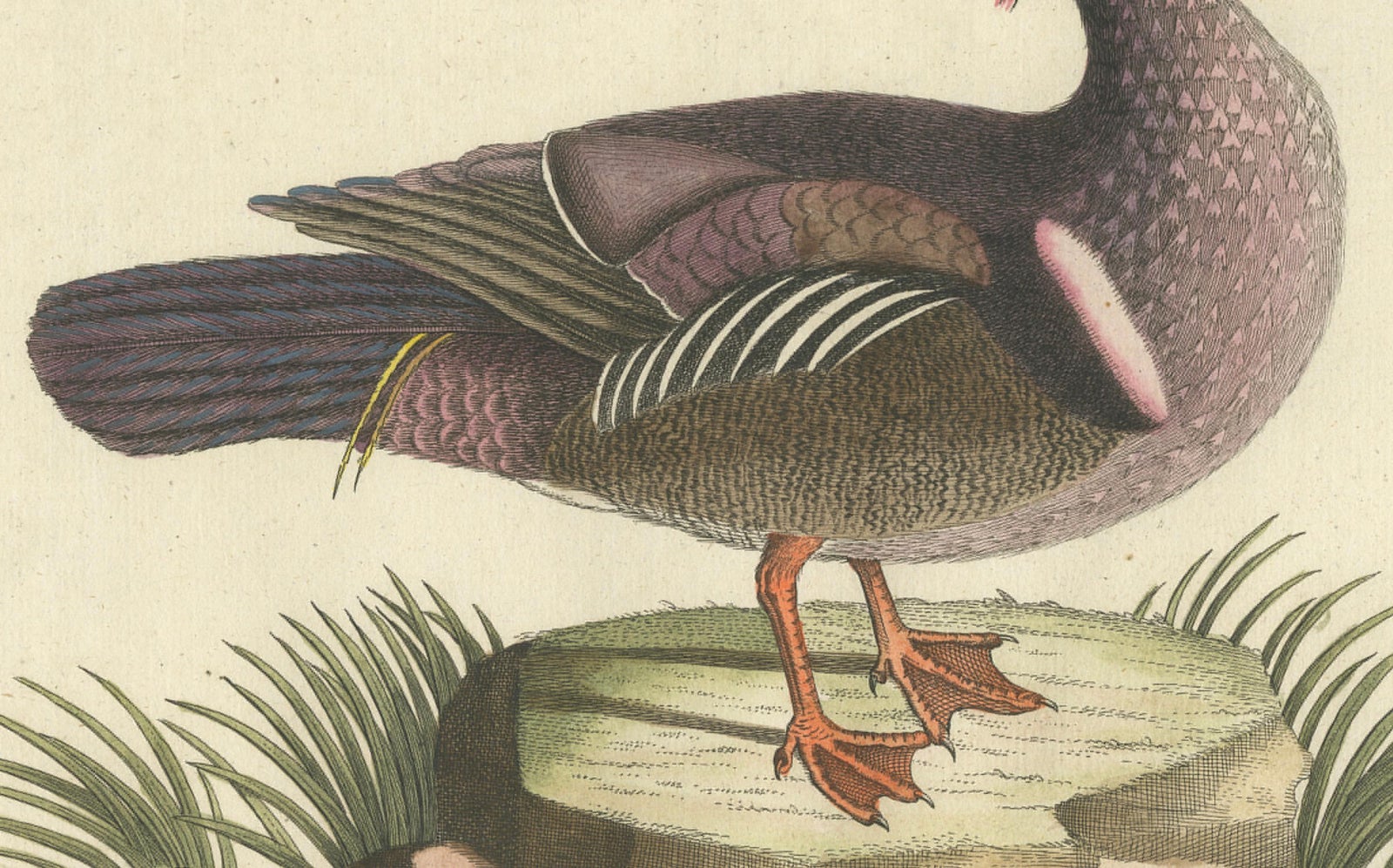
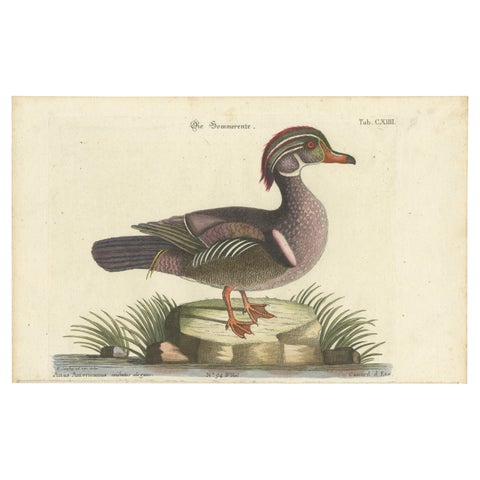
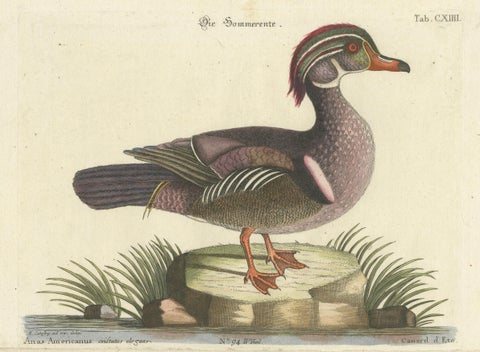
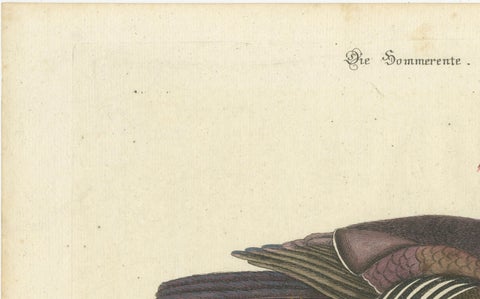
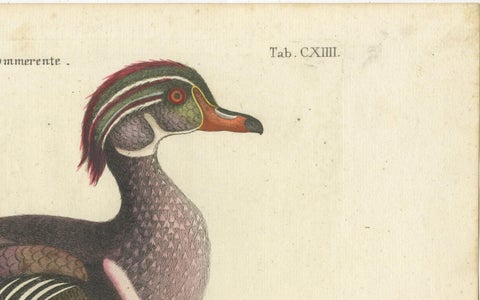
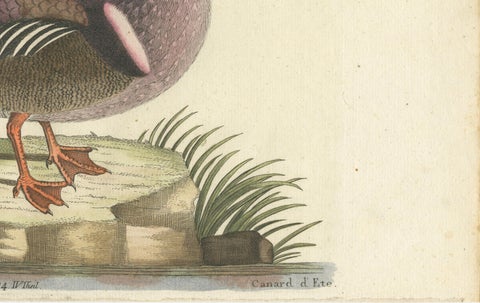
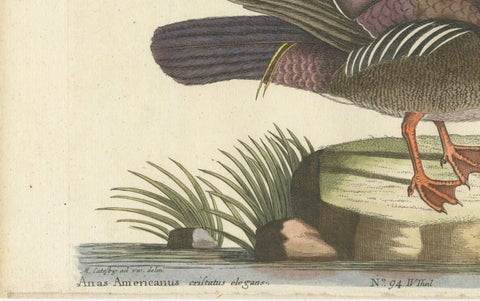
Wood Duck – Die Sommerente / Canard d’Été, after Mark Catesby, Seligmann, c.1770
$660
€590 · dollar price at today's exchange rate
Buy now Ask a question
Shipping to the United States: $51 standard, $73 express, insured and tracked.
- Date
- 1770
- Maker
- Mark Catesby
- Kind
- Birds, Plants & Natural History
- Size
- 23.8 × 37.5 cm (9.4 × 14.8 in)
- Period
- Colonial America
- Reference
- BG-13941
What the condition grades mean
- Excellent
- Bright and clean, with no faults worth mentioning.
- Very good
- Only light signs of age, such as faint toning.
- Good
- Normal signs of age for a sheet of this period: toning, some foxing, small marks or neat old repairs.
- Fair
- Clear faults such as staining, tears or repairs, priced to match.
Every fault we see is written in the condition note, and the whole sheet is shown uncropped in the photos.
Guaranteed original. This is an original of the period stated, not a later reproduction or print-on-demand copy. If it is ever shown to be otherwise, we refund you in full.
Shipping to the United States. Sent from our gallery in Langweer, the Netherlands, flat between boards or rolled in a tube, and fully insured.
Delivery and import charges.
About this piece
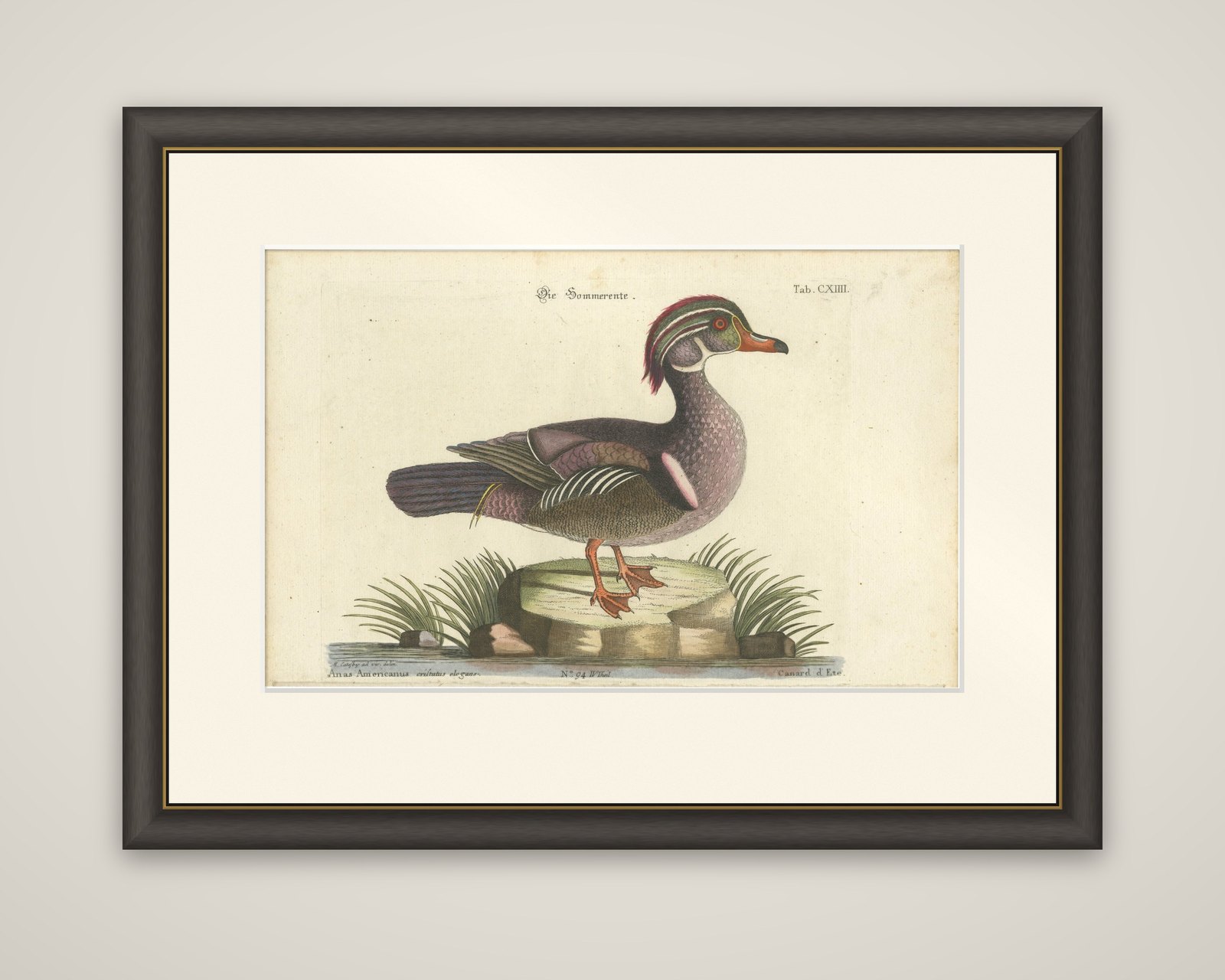
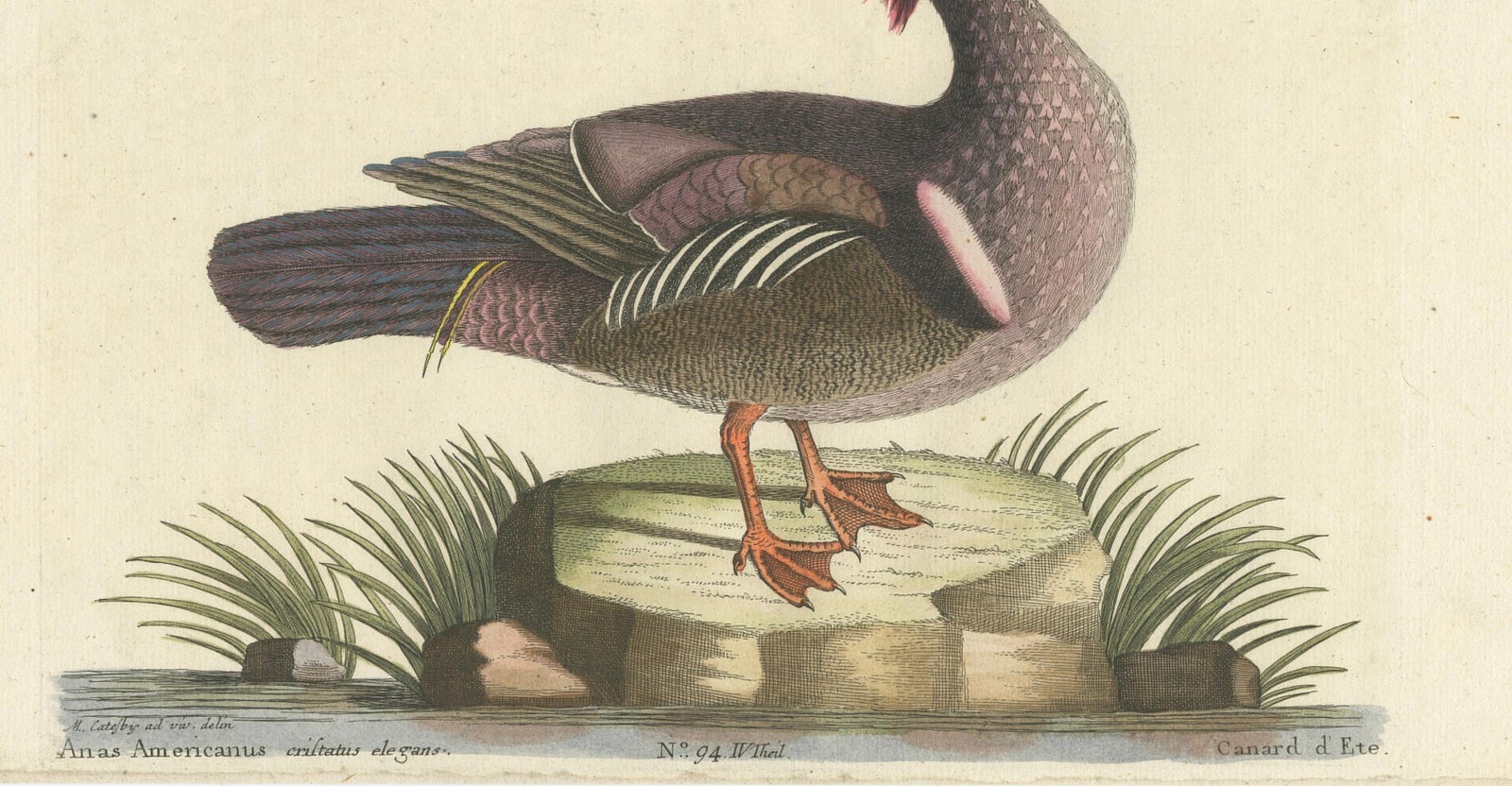
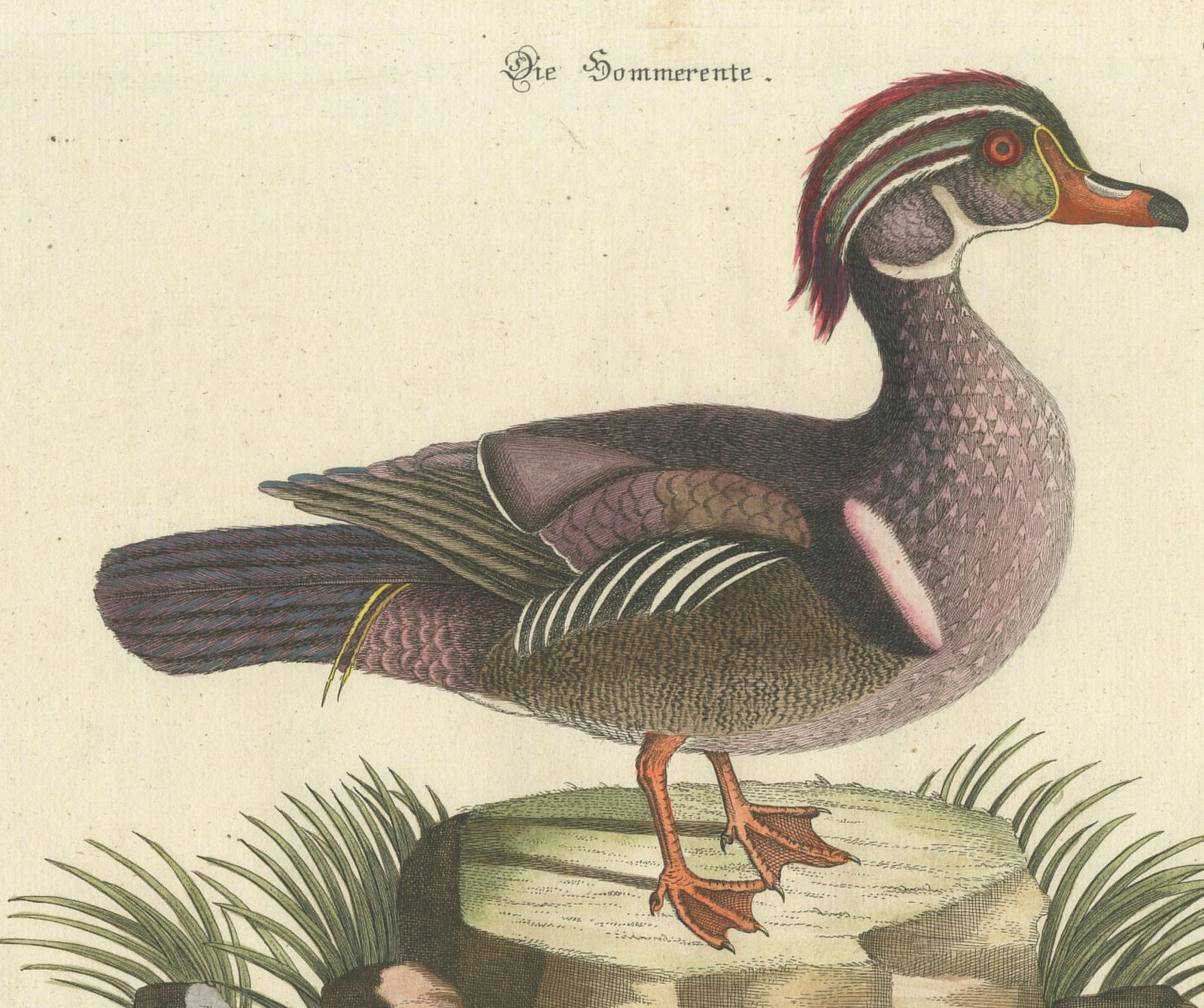
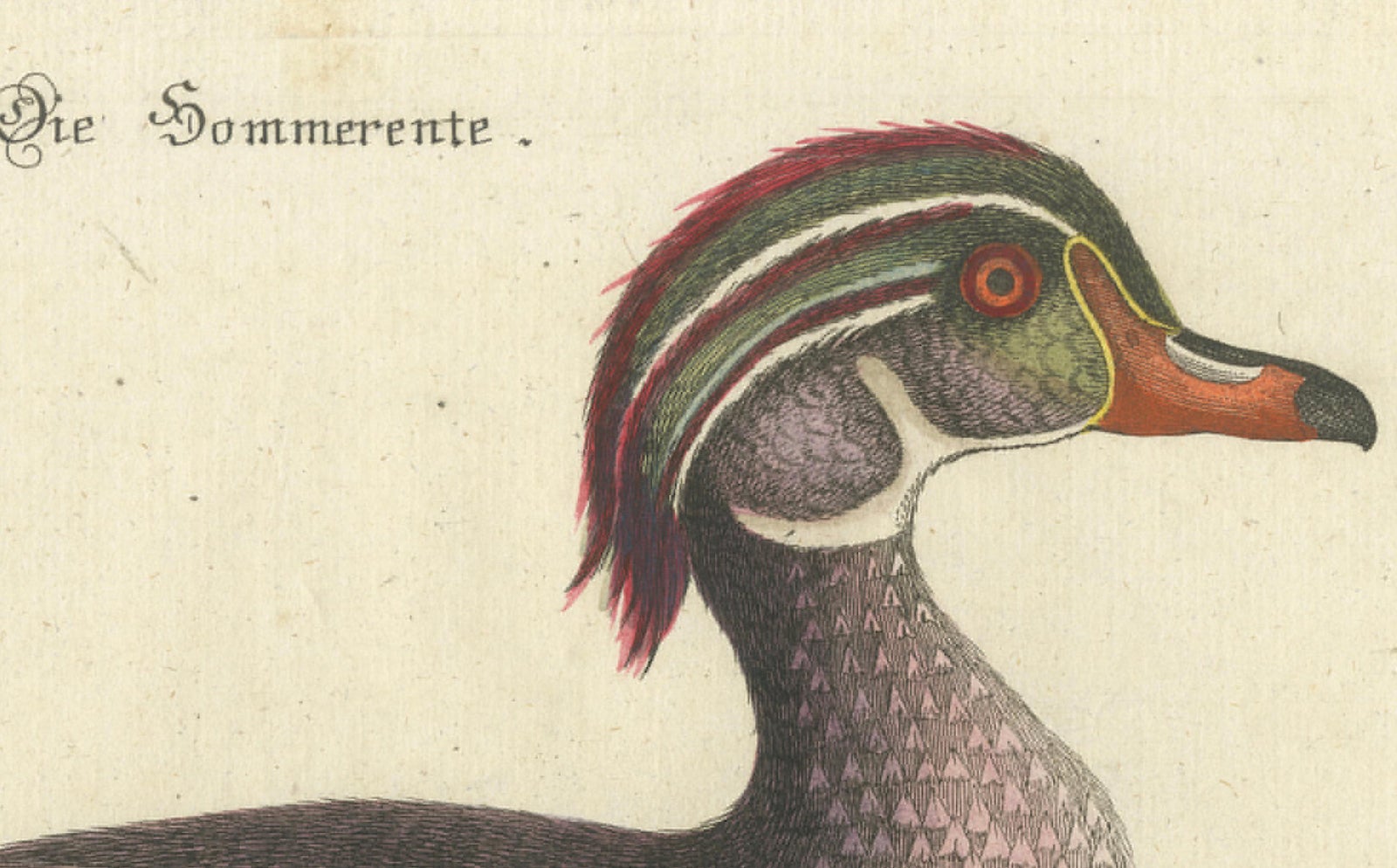
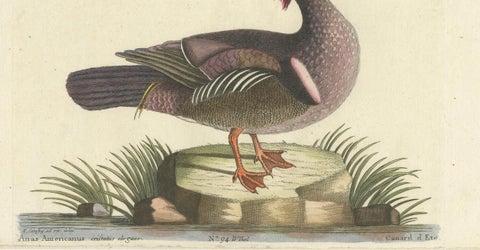
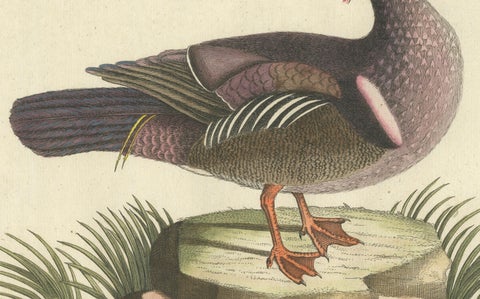
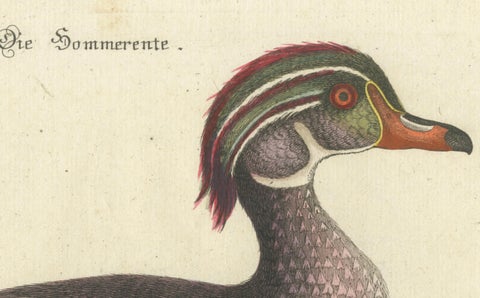
The wood duck, titled "Die Sommerente", in an original hand-colored copperplate engraving after Mark Catesby, circa 1770, from Johann Michael Seligmann's Sammlung verschiedener ausländischer und seltener Vögel, published in Nuremberg. The plate is lettered below with the Latin "Anas Americanus cristatus elegans", "N° 94 IV Theil" and the French "Canard d'Eté", and the credit "M. Catesby ad viv. delin." appears at the lower left.
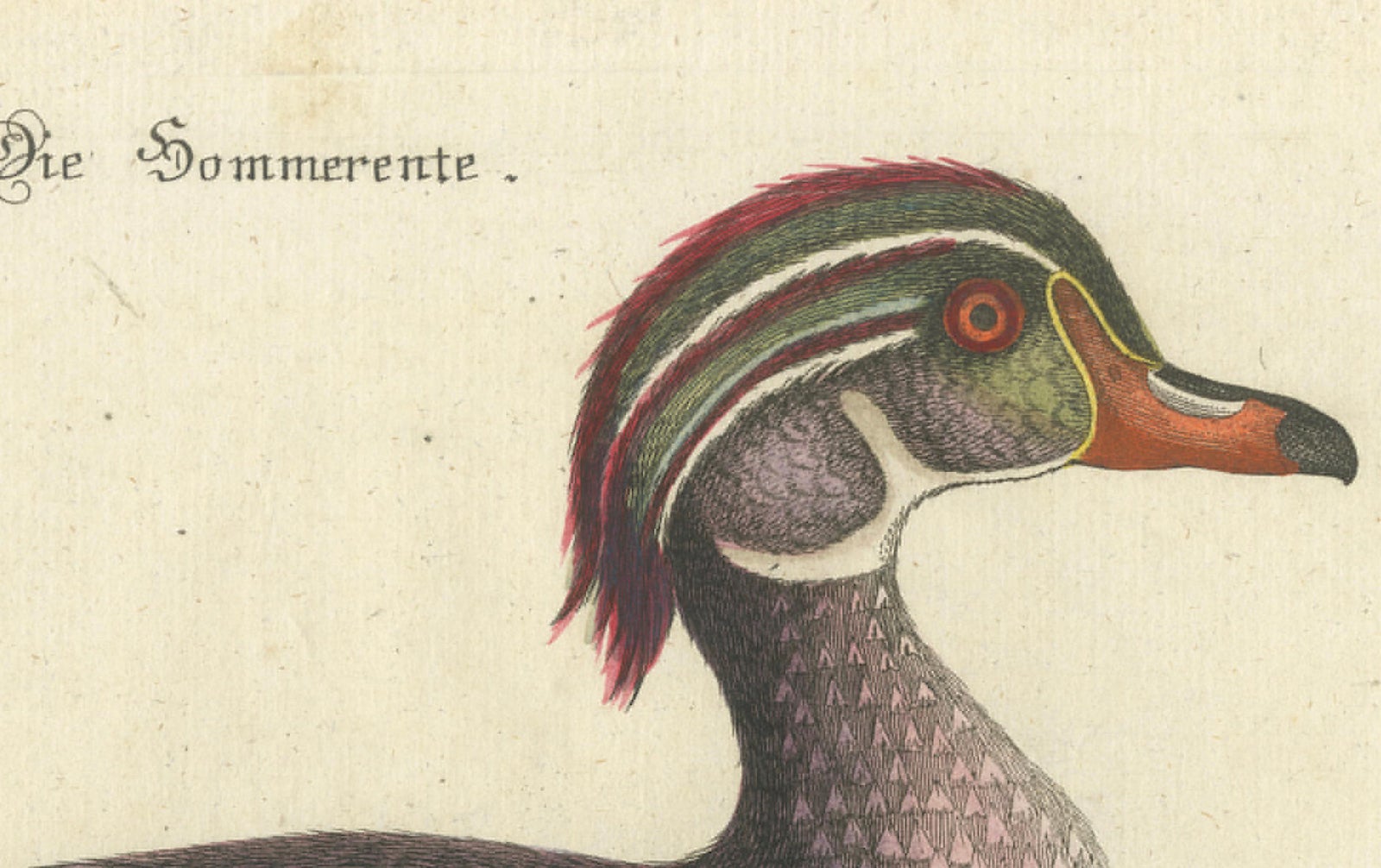
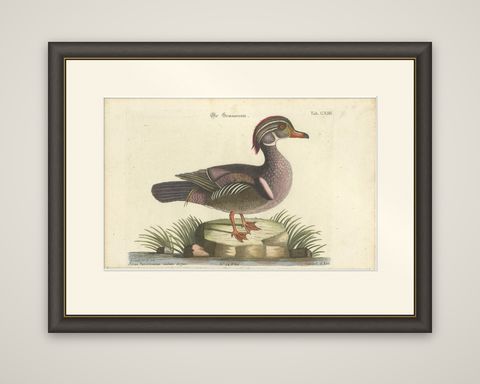
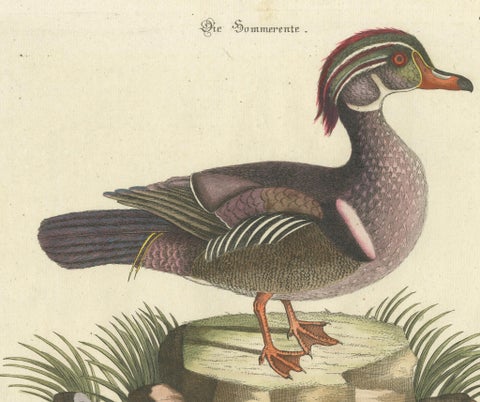
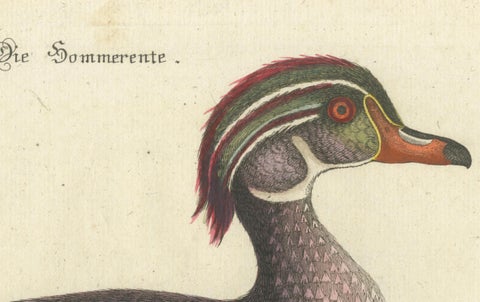
The drake stands in profile facing right on a flat, mossy rock, with tufts of grass rising behind it on both sides and water along the foot. The crested head is drawn in great detail: a swept-back crest in red and green with white stripes, a red eye, and an orange bill with a dark tip. The breast is mauve and finely spotted, with a pink flash at the side, the folded wing is striped in white and green over a mottled brown back, and the long tail is dark purple. The legs and webbed feet are bright orange.
The wood duck was one of the showpieces of Catesby's Natural History of Carolina, Florida and the Bahama Islands, which appeared in 1729 to 1747. Seligmann re-engraved the plates for a German audience, with captions in three languages.