1836 · Views & Engravings
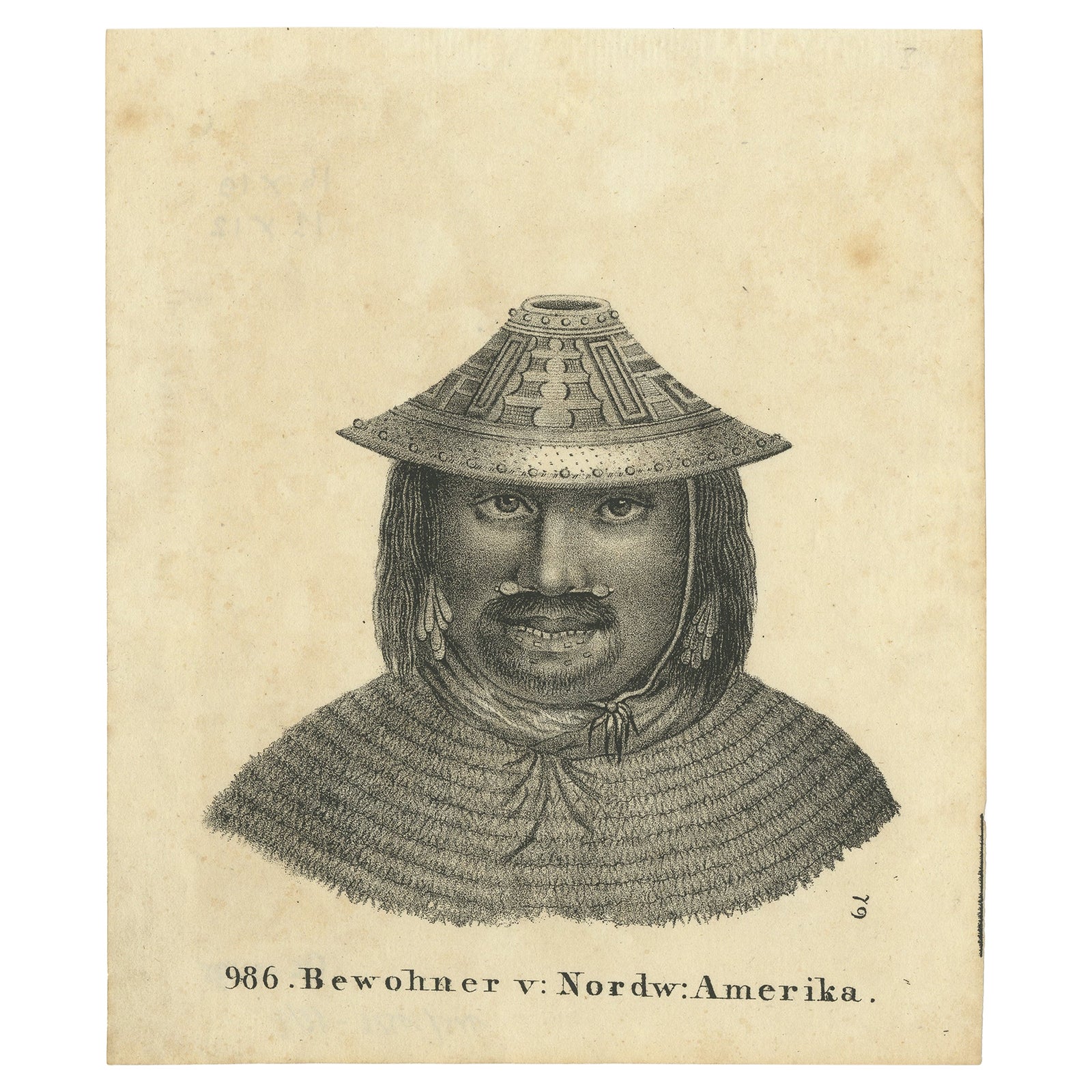
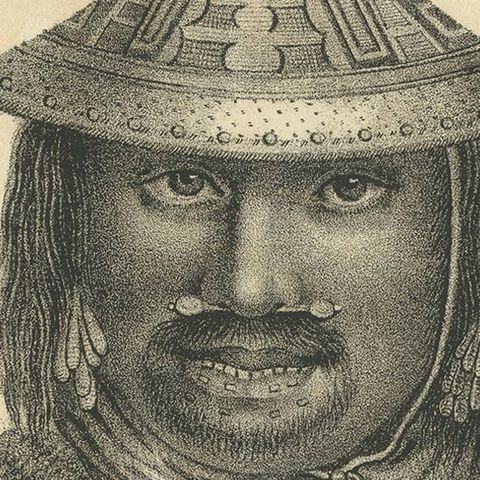
Antique Print of an Inhabitant of Northwest America, 1836
$170
€150 · dollar price at today's exchange rate
Buy now Ask a question
Shipping to the United States: $51 standard, $73 express, insured and tracked.
- Date
- 1836
- Kind
- Views & Engravings
- Size
- 19 × 16 cm (7.5 × 6.3 in)
- Condition
- Good
- Period
- The Early Republic
- Reference
- BG-10435
What the condition grades mean
- Excellent
- Bright and clean, with no faults worth mentioning.
- Very good
- Only light signs of age, such as faint toning.
- Good
- Normal signs of age for a sheet of this period: toning, some foxing, small marks or neat old repairs.
- Fair
- Clear faults such as staining, tears or repairs, priced to match.
Every fault we see is written in the condition note, and the whole sheet is shown uncropped in the photos.
Guaranteed original. This is an original of the period stated, not a later reproduction or print-on-demand copy. If it is ever shown to be otherwise, we refund you in full.
Shipping to the United States. Sent from our gallery in Langweer, the Netherlands, flat between boards or rolled in a tube, and fully insured.
Delivery and import charges.
About this piece
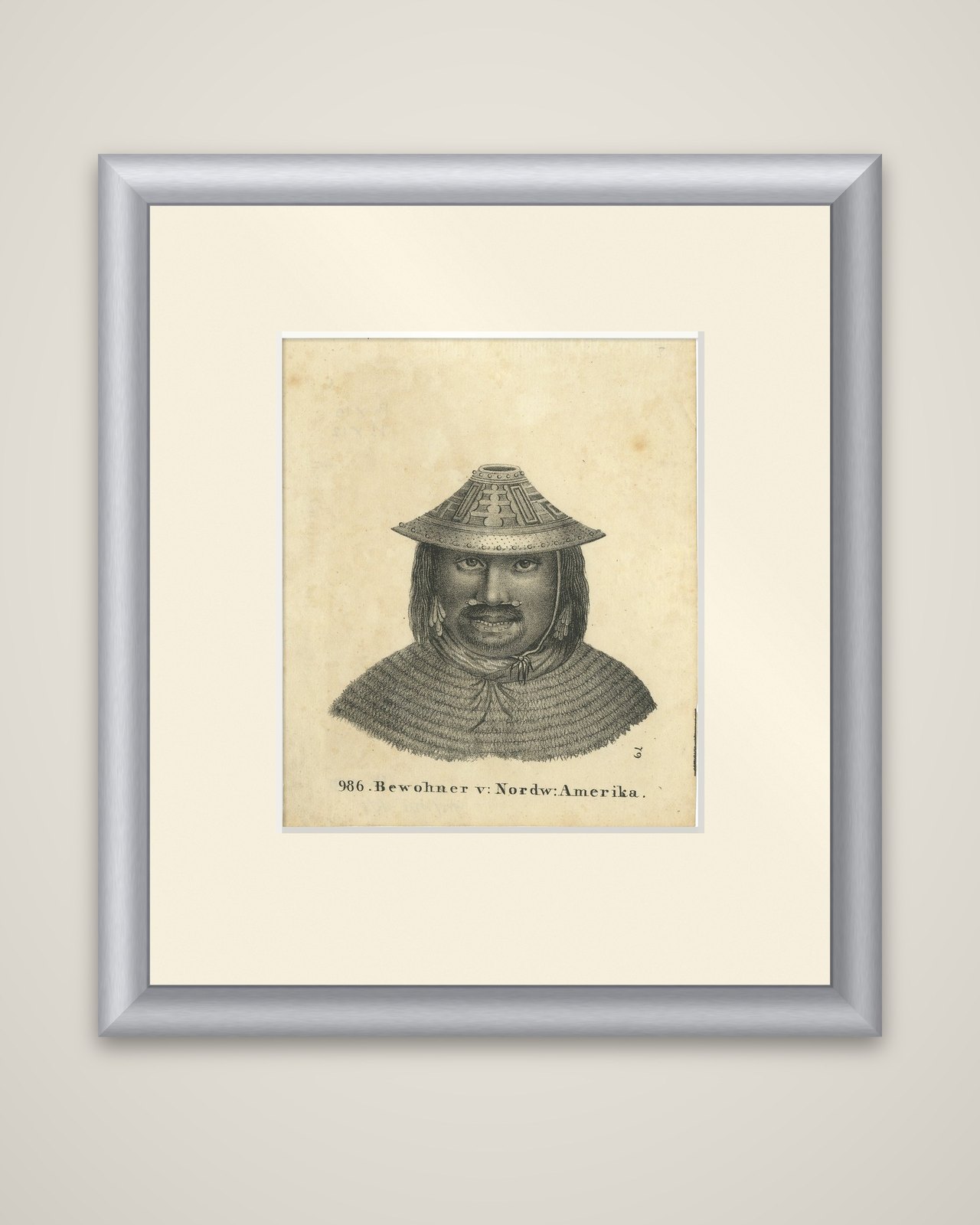
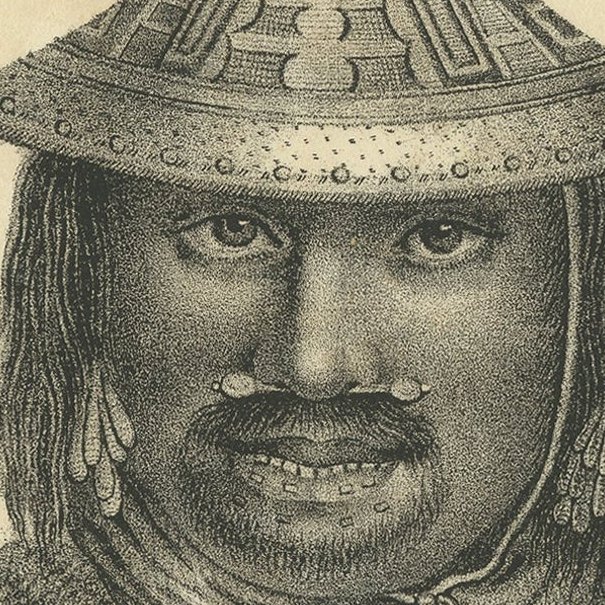
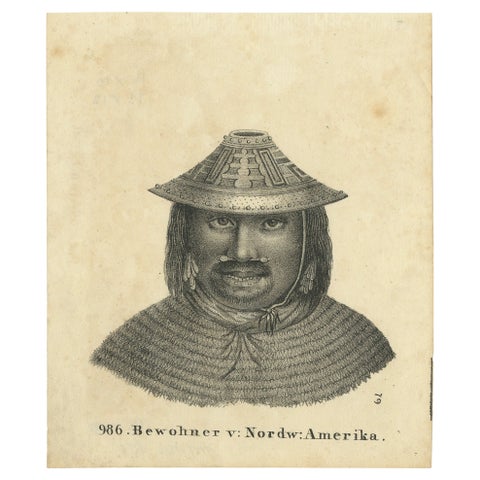
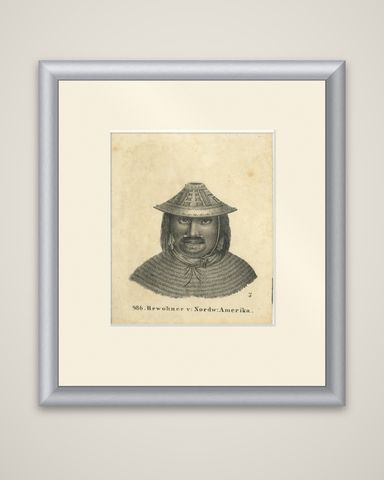
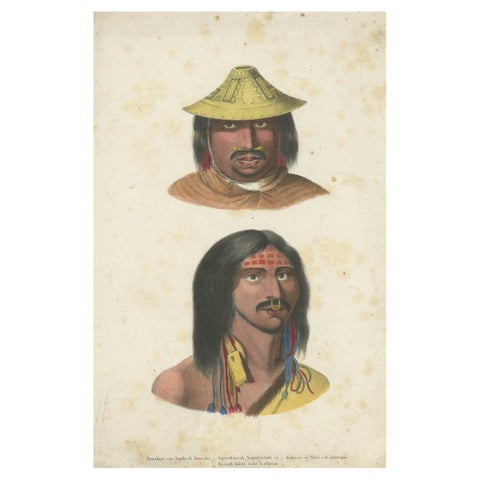
Bewohner von Nordw: Amerika, a lithographed bust portrait of an inhabitant of northwest America, from Neue Bildergalerie für die Jugend, published in 1836. The print is anonymous and numbered 986 in the caption line, with a small plate number at the lower right.
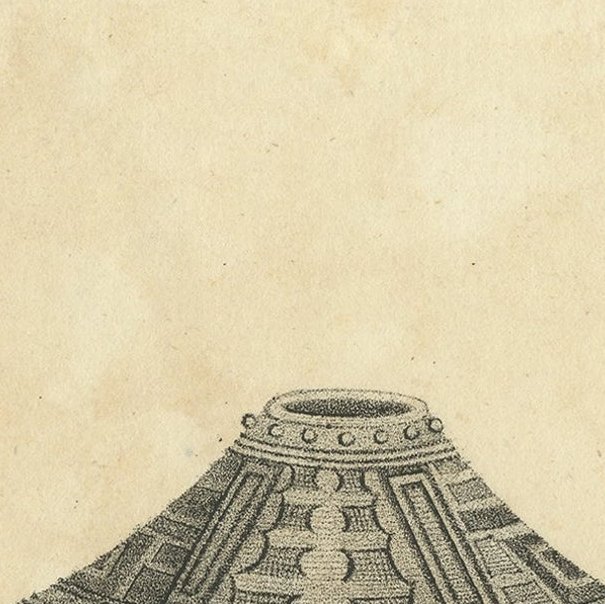
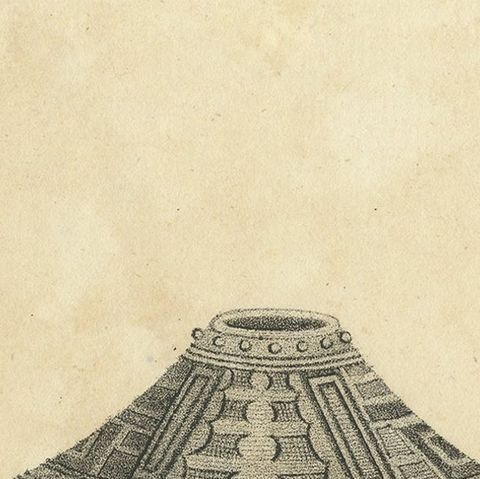
The sheet is printed in black and gray from stone on cream paper. A man is shown from the chest up, facing the viewer directly, in a tall conical hat of woven fiber with a flat brim decorated in a geometric pattern and studded around the edge. He wears a heavy fringed cape of twisted or coiled fiber over his shoulders, fastened with a cord at the neck. Long dark hair falls on either side of his face, drop ornaments hang from his ears, and a small ornament is set in his nose.
The plate belongs to a German picture gallery for young readers, a type of illustrated book that presented peoples of the world through small portraits. These images were drawn by European artists and reflect the knowledge and conventions of the period; the detail of costume, however, makes the sheet a record of how northwest coast peoples were pictured in German publications of the 1830s.